

A nine-figure sum in euros, a dozen corporations, and a chancellor publicly standing shoulder to shoulder with a chipmaker: what unfolded in Berlin on October 19 and 20, 2026 was no ordinary economic summit. At the “Invest in Germany” conference, Chancellor Friedrich Merz and Nvidia CEO Jensen Huang announced a strategic cooperation that, for the first time, puts concrete figures and names behind the idea of a Germany-Nvidia AI partnership. While doubts about overheated AI valuations grow on global markets, Germany is deliberately sending a counter-signal: investment instead of hesitation.
This article breaks down the facts, explains the technical and political background, and shows what the announcement means for industry, mid-sized businesses (Mittelstand), and Germany’s push for AI sovereignty.
Table of Contents
Key Takeaways
- Chancellor Friedrich Merz and Nvidia CEO Jensen Huang announced a strategic AI partnership at the 2026 Invest in Germany summit.
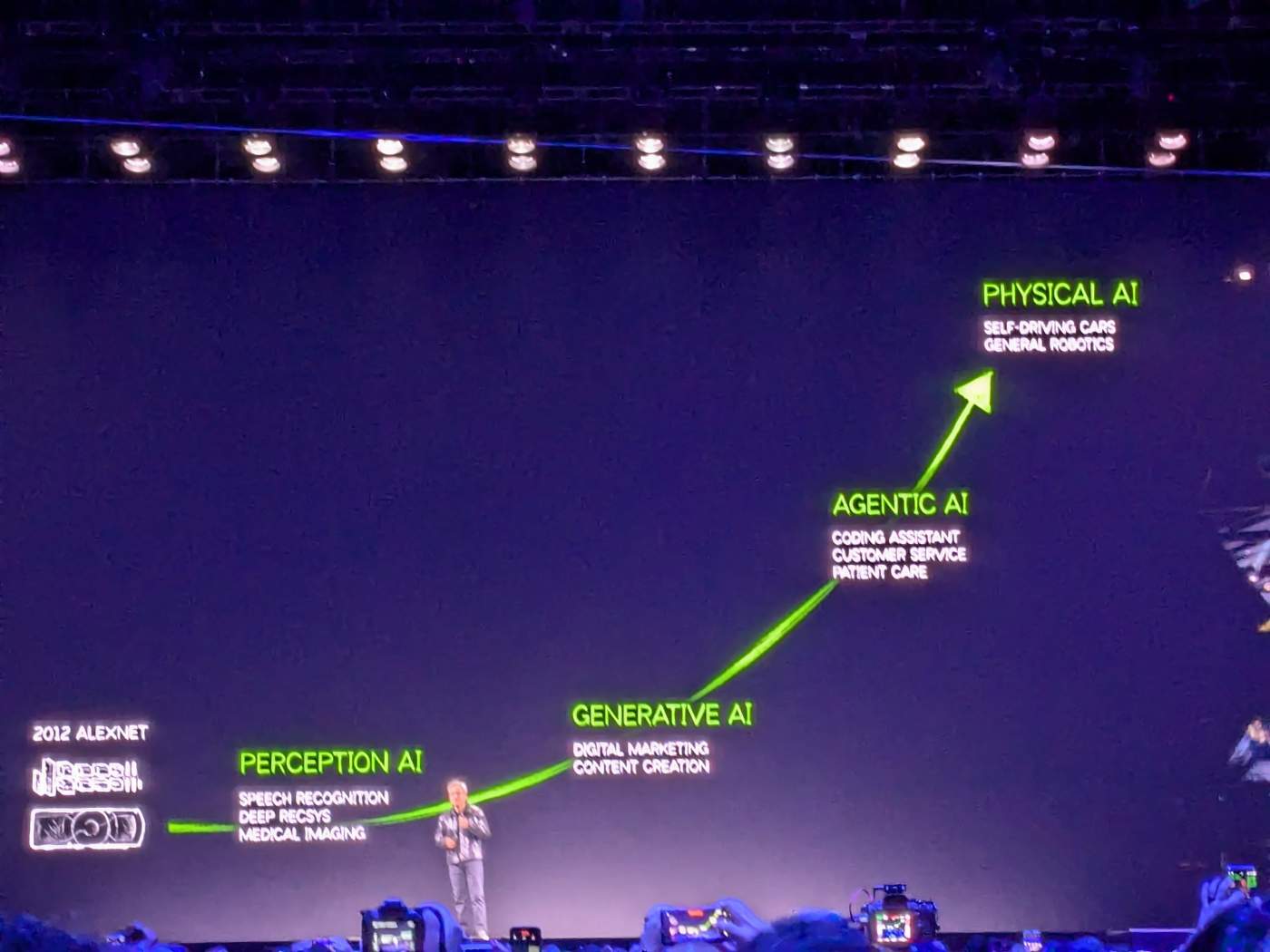
- The focus is on “physical AI” for robotics, autonomous vehicles, and industrial manufacturing.
- The German federal government is committing a sum in the hundreds of millions of euros, partly to rent compute capacity from Deutsche Telekom.
- Around a dozen German companies are involved, including Siemens, Audi, and Black Forest Labs.
- The project builds on the existing SOOFI initiative and feeds directly into the debate over digital sovereignty.
What was actually agreed at the Invest in Germany summit
The Berlin summit brought politics and industry to the same table to bundle investment in Germany as a business location. At its center was the announcement of a collaboration between the federal government and Nvidia that goes far beyond a simple supply relationship. This is a structured partnership with clearly named goals, partners, and a defined financial framework.
According to the federal government, the Germany-Nvidia AI partnership is meant above all to advance the use of so-called “physical AI.” That means AI systems that don’t just process text or images, but control real physical processes: industrial robots, autonomous vehicles, and automated production lines.
The key facts at a glance
| Aspect | Details |
|---|---|
| Location and date | Berlin, October 19-20, 2026 |
| Top political figure involved | Chancellor Friedrich Merz |
| Company involved | Nvidia, CEO Jensen Huang |
| Federal investment volume | A sum in the hundreds of millions of euros |
| Nvidia’s contribution | Engineers on the ground, chip deliveries |
| Companies involved | About a dozen, including Siemens, Audi, Black Forest Labs |
| Technical foundation | Deutsche Telekom AI cloud, up to 10,000 Nvidia chips |
| Prior project | SOOFI, launched September 2025 |
Physical AI as the strategic goal of the Germany-Nvidia AI partnership
Why is Germany betting specifically on physical AI? The answer lies in the country’s industrial structure. Germany is strong in mechanical engineering, the automotive industry, and industrial manufacturing. Classic language models alone offer these sectors little competitive edge. Robotics and manufacturing AI, on the other hand, hits at the core of the German economy.
Physical AI describes systems that process sensor data from the real world and make real-time decisions, for example when steering a robotic arm or an autonomous vehicle. Nvidia has built a technological leadership position in this field through specialized chip architectures and simulation platforms. How capable that technology already is can be seen in the fact that Nvidia’s Nemotron 3 AI model recently achieved gold-level results at academic olympiads.
For German industry, this means: companies like Siemens or Audi get early access to hardware and expertise to optimize their own robotics and manufacturing processes with AI before international competitors do.
Financing: who is paying for what in the Germany-Nvidia AI partnership
According to consistent reporting from ZDFheute, Deutschlandfunk, WirtschaftsWoche, and Reuters, the federal government is prepared to invest a sum in the hundreds of millions of euros into the project. A significant portion of these funds is intended to rent compute capacity on Deutsche Telekom’s AI cloud.
This cloud is not a new development built for the summit — it has been under construction for some time already. Deutsche Telekom operates an industrial AI cloud with up to 10,000 Nvidia chips as part of a multi-billion-euro partnership. The federal government is essentially renting into existing infrastructure rather than building entirely new data centers from scratch, which saves time and reduces the risk of delays.
Nvidia itself is not just contributing hardware. The company is sending engineers to Germany to support the technology’s implementation on the ground. This combination of capital, chips, and personnel makes the partnership one of the most concrete AI industrial projects a federal government has agreed to with a single technology company to date.
“Digital sovereignty doesn’t depend on who supplies the hardware, but on who controls the data and the applications.”
— Jensen Huang, CEO of Nvidia, in a ZDF interview
The companies involved: a cross-section of German industry
About a dozen German companies are part of the Germany-Nvidia AI partnership. Among the best known are:
- Siemens, industrial automation and manufacturing technology
- Audi (a Volkswagen subsidiary), automotive manufacturing and autonomous driving
- Black Forest Labs, a German AI company focused on generative models
This lineup shows a deliberate mix of established industrial corporations and younger AI specialists. While Siemens and Audi bring real production environments where physical AI can be tested and scaled, Black Forest Labs contributes expertise in modern AI models.
The full list of all twelve companies has not yet been published in its entirety, but the combination of heavy industry, the automotive sector, and AI specialists points to a project with a broad range of applications rather than a purely research-focused initiative.
SOOFI as the foundation: how the partnership builds on existing work
The partnership isn’t emerging out of nowhere. It builds on SOOFI, the “Sovereign Open Source Foundation Models” project, which was already launched in September 2025. SOOFI brings together German research institutions, universities, and AI companies with the goal of developing open, sovereign AI foundation models that can operate independently of infrastructure outside Europe.
That the new Nvidia partnership explicitly builds on SOOFI reflects a strategic continuity in German AI policy: first build open models and research structures, then pursue targeted industrialization with a global technology partner. For developers and research institutions, this means SOOFI’s existing work now gets additional compute capacity and industrial use cases through the partnership.
Digital sovereignty: Huang’s counterargument to the criticism
Critics accuse the federal government of creating a new dependency on a US technology corporation through the Germany-Nvidia AI partnership. Jensen Huang addressed this criticism in the ZDF interview with a notable argument: digital sovereignty, he said, isn’t measured by who supplies the hardware, but by who controls the data and applications.
This position shifts the debate. Instead of asking which country the chips come from, Huang puts the focus on where data is stored and processed, and who decides over the applications. By this logic, Germany remains sovereign as long as the data centers — such as Deutsche Telekom’s AI cloud — are located on German soil and subject to German law, regardless of the country of origin of the chips inside them.
Whether this argument fully resolves the skepticism in politics and the public remains to be seen. What is clear, though, is that it shapes the legal and technical structure of the partnership: operation in Germany, control by German institutions, hardware from Nvidia.
Why the timing of the announcement stands out
The announcement comes during a phase of growing skepticism on global financial markets toward AI valuations. A clear example was the stock market debut of South Korean company Elice on October 20, 2026, whose share price plunged 32 percent. Events like this are fueling the debate over whether the AI sector is overvalued.
That Germany is announcing a large-scale state investment in AI infrastructure in exactly this environment can be read two ways:
- As a countercyclical signal: while private investors grow more cautious, the German state is positioning itself for the long term, stepping in deliberately at a moment when negotiating leverage may be greater.
- As a risk: critics could argue that public money is flowing into a market whose valuations are currently under pressure.
For entrepreneurs and developers in Germany, the first point is especially relevant: regardless of stock market sentiment, the partnership creates real infrastructure and real access to compute power that remains usable in the medium term.
What it means for developers, mid-sized businesses, and Germany as an AI location
For Germany’s tech scene, the partnership opens up several concrete prospects:
- Access to compute power: Deutsche Telekom’s cloud with up to 10,000 Nvidia chips could eventually benefit smaller companies and research teams too, if appropriate access models are created.
- Real-world use cases: through the involvement of Siemens and Audi, real test environments for physical AI emerge that go beyond pure research projects.
- Strengthening open models: the link to SOOFI supports the development of sovereign, open AI models that don’t depend exclusively on Big Tech platforms.
- Signal effect for investors: a state-backed partnership with a world market leader can attract further private investment into the German AI sector.
At the same time, it remains to be seen how concretely and quickly the announced funds actually flow, and how transparent access to the new capacity will be made for mid-sized businesses and startups.
Conclusion and next steps
The Germany-Nvidia AI partnership marks a turning point in German industrial policy. For the first time, the federal government is combining concrete financial commitments, existing cloud infrastructure, and the involvement of leading industrial companies with a strategy to anchor physical AI in robotics, automotive manufacturing, and production. The combination of the SOOFI foundation, Telekom infrastructure, and Nvidia technology creates a structure that goes beyond symbolic declarations of intent.
For tech-minded readers, developers, and entrepreneurs, it’s worth watching three points closely in the coming months: how the federal funds are actually spent, the access conditions to Telekom’s AI cloud for smaller players, and the further development of SOOFI as a sovereign counter-model to closed AI platforms. Anyone active in the German AI industry should check early on whether their own projects can tie into SOOFI or the new compute capacity, rather than just watching the development from the outside.