A 10-year Treasury yield spike to its highest level since 2002 is not the kind of headline crypto traders wake up to very often. Yet that is exactly what happened in the past 24 hours, and it is a big reason why the latest Bitcoin price news shows the token sliding under the $83,000 mark even as some of the biggest names in finance keep building out crypto infrastructure behind the scenes.
The split is striking. On one side, Wall Street is quietly deepening its ties to digital assets through new integrations and balance sheet moves. On the other, a wall of macro pressure, from Federal Reserve policy signals to rising geopolitical risk in Iran, is dragging prices lower. According to an analysis by crypto analyst @RobynHD on X (October 8, 2026), this tug-of-war between infrastructure growth and macro headwinds defines the current state of the market.
Key Takeaways
- Bitcoin trades around $82,600, down 1.8% in 24 hours, while Ethereum sits near $2,560, down 1.9 percent.
- Wall Street infrastructure keeps expanding: Robinhood added roughly $25 million in BTC to its balance sheet, Coinbase completed its Deribit integration, and Wells Fargo is reportedly exploring crypto liquidity talks with Kraken parent Payward.
- Macro pressure is intensifying: Fed minutes point to an 83% priced-in probability of a December rate hike, the 10-year Treasury yield briefly hit 5.365%, and Brent crude climbed above $102 amid Iran-related military concerns.
- BTC ETFs saw $484.9 million in outflows, their largest single-day outflow in weeks, while ETH ETFs logged a seventh straight day of redemptions totaling $160.9 million.
- The critical technical level to watch is the average ETF cost basis near $82,300, which Bitcoin is currently hovering just above.
Positive Developments: Wall Street Expands Crypto Infrastructure
Despite the price pullback, the underlying infrastructure story for crypto continues to strengthen. Several developments over the past day point to deepening institutional involvement, even as headline prices struggle.
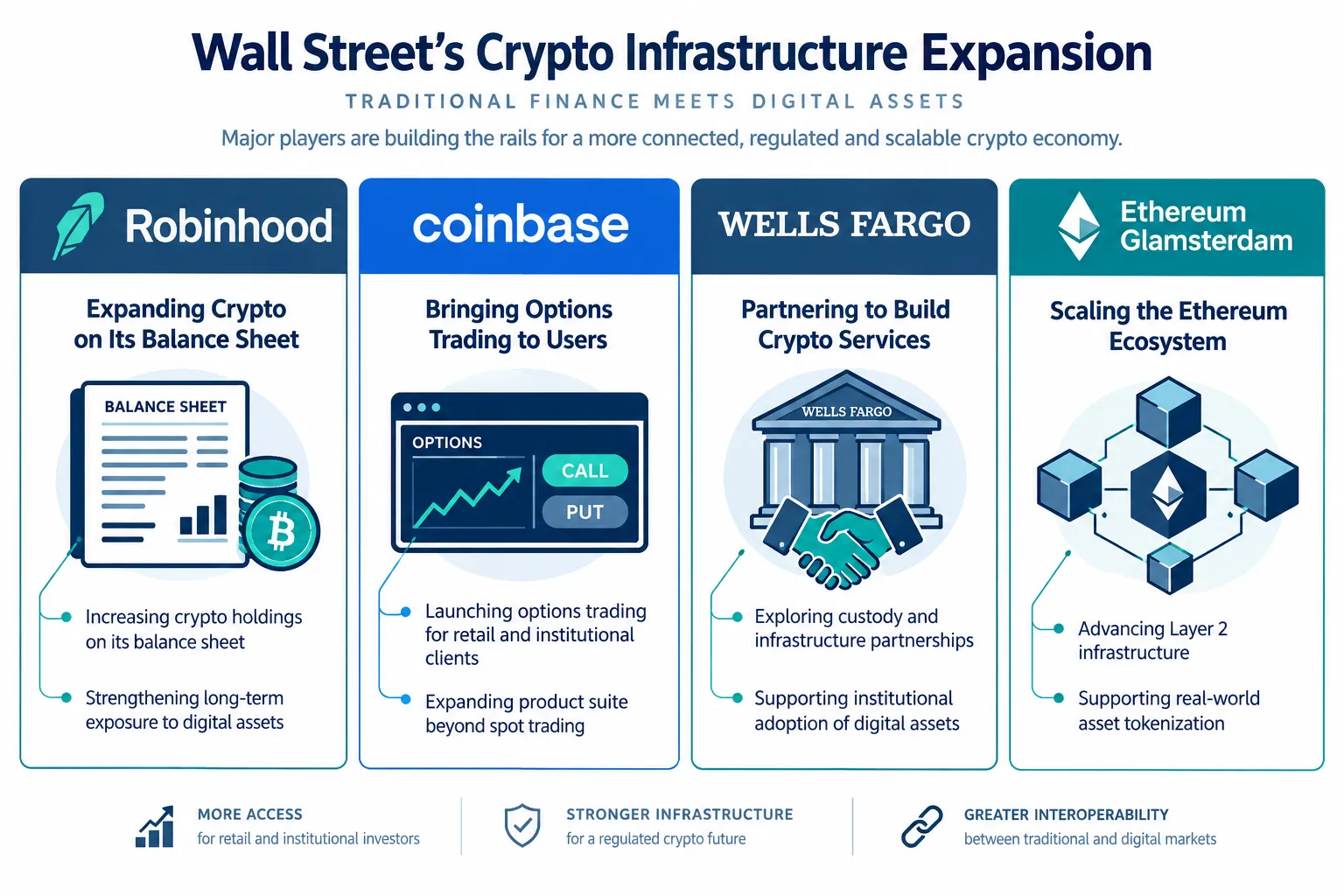
Robinhood has added approximately $25 million worth of Bitcoin to its corporate balance sheet, according to the company's crypto chief Johann Kerbrat. The amount is modest relative to the size of the broader market, but the symbolic weight matters. A mainstream retail brokerage choosing to hold BTC directly signals confidence that goes beyond simply offering trading access to customers.
Coinbase, meanwhile, has completed its integration with Deribit, a major derivatives exchange. This move gives US institutions direct access to crypto options and perpetual futures products that were previously harder to reach through regulated domestic channels. For institutional desks that manage risk through derivatives, this kind of access can be just as important as spot market availability.
Perhaps the most notable signal comes from traditional banking. CoinDesk reports that Wells Fargo is in talks with Payward, the parent company of Kraken, regarding crypto liquidity arrangements. No deal has been finalized yet, but the fact that a major US bank is even exploring this kind of relationship underscores how mainstream crypto market infrastructure has become, regardless of short-term price swings.
On the technology side, Ethereum's Glamsterdam upgrade has moved onto testnet, raising the per-block gas limit from roughly 60 million to nearly 200 million. This is a substantial capacity increase that could meaningfully improve network throughput once it reaches mainnet, supporting more transactions and more complex smart contract activity without congesting the chain.
Taken together, these four developments reinforce a theme that has been building for months: the plumbing of crypto markets, custody, liquidity, derivatives access, and blockchain capacity, keeps improving even when spot prices are under pressure.
Neutral Factors Shaping Bitcoin Price News
Not every data point from the last 24 hours falls clearly into the positive or negative column. Some figures are simply worth tracking as context for where the market stands right now.

| Metric | Current Reading |
|---|---|
| Bitcoin (BTC) | Around $82,600, down 1.8% in 24 hours |
| Ethereum (ETH) | Around $2,560, down 1.9% in 24 hours |
| Fear & Greed Index | Fell to 64 |
| Average ETF cost basis | Approximately $82,300 |
Bitcoin's current price sits only slightly above that average ETF cost basis of roughly $82,300. This level is important because it represents the rough break-even point for a large portion of the exchange-traded fund holders who have entered the market since spot BTC ETFs launched. If price slips meaningfully below that threshold, a wave of ETF holders would find themselves underwater, which historically can intensify selling pressure.
The Fear & Greed Index dropping to 64 suggests sentiment is cooling but has not swung into outright fear territory. It remains in a zone often described as greed, just a less confident version of it than seen in recent weeks.
Outside crypto markets, two developments add texture to the macro picture. Bank of Japan board member Sato, who had opposed a rate hike in September, now supports further gradual increases, a shift that could matter for global liquidity conditions. Separately, the German cabinet approved higher social security contribution ceilings for 2027, with high earners set to pay up to roughly 102 EUR more per month. Neither development directly moves crypto prices today, but both feed into the broader global rate and policy environment that traders are watching closely.
Headwinds Pressuring Bitcoin Price News
The dominant story in the latest Bitcoin price news is not infrastructure, it is macroeconomic pressure, and it is coming from multiple directions at once.
The Federal Reserve's latest minutes show a majority of policymakers consider another rate hike likely before year-end, with markets now pricing an 83% probability of a December increase. Higher rates typically reduce the appeal of non-yielding assets like Bitcoin, since investors can earn more from safer instruments such as Treasury bonds.
"Crypto infrastructure keeps growing, but macro factors are dominating right now: rates, oil, and the dollar are pressuring BTC," according to the analysis shared by @RobynHD on X.
Geopolitical risk has also intensified. Axios reports that the Pentagon is preparing for a resumption of larger-scale military action in Iran. That news pushed Brent crude above $102 per barrel, and rising oil prices tend to fuel inflation concerns, which in turn reinforces expectations for tighter monetary policy.
Bond markets delivered their own shock. The 10-year US Treasury yield briefly touched 5.365%, its highest level since 2002. That is a significant threshold, and it illustrates how aggressively fixed-income markets are repricing expectations for future rate policy.
Fund flow data confirms that institutional investors are reacting to this pressure. Bitcoin ETFs recorded $484.9 million in outflows, the largest single-day outflow in weeks. Ethereum ETFs were not spared either, logging $160.9 million in outflows, marking a seventh consecutive day of redemptions.
Adding another layer of market anxiety, SpaceX credit default swaps hit a record high of about 195 basis points amid reports the company is discussing $40 billion in new debt to fund AI chip purchases. While not a crypto-specific event, this kind of corporate credit stress adds to a broader climate of risk-off sentiment across markets that tend to move together during periods of tightening financial conditions.
Why the $82,300 Level Matters for Bitcoin Price News
The recurring reference point across this entire Bitcoin price news cycle is the average ETF cost basis near $82,300. Bitcoin's current price around $82,600 leaves very little breathing room above that figure. If selling pressure from the Fed outlook, oil prices, or bond yields pushes BTC decisively below this level, it could trigger further ETF outflows as holders who bought near the average cost basis move to limit losses. Conversely, holding above this line could help stabilize sentiment and limit the depth of the current pullback.
Outlook and Conclusion
The latest Bitcoin price news tells a two-track story. Institutional crypto infrastructure, from Robinhood's balance sheet addition to Coinbase's Deribit integration, Wells Fargo's reported talks with Payward, and Ethereum's Glamsterdam testnet upgrade, continues to mature regardless of short-term price action. These are structural developments that typically play out over months and years, not days.
At the same time, the immediate price trajectory is being set by forces outside crypto's control: a Fed leaning toward another rate hike, a Treasury yield spike to a 23-year high, rising oil prices tied to Iran-related military risk, and heavy ETF outflows across both BTC and ETH products. These pressures explain why Bitcoin has fallen below $83,000 even as the long-term infrastructure narrative remains constructive.
For traders and investors, the near-term focus should stay on two things: whether the Federal Reserve follows through on the roughly 83% priced-in December rate hike, and whether Bitcoin can hold the average ETF cost basis around $82,300. A sustained break below that level would be a meaningful technical and psychological setback, while holding it could set the stage for stabilization once macro conditions ease.
As always in volatile markets, risk management matters more than prediction. Watching ETF flow data, Treasury yield movements, and geopolitical headlines in the days ahead will likely provide clearer signals than any single price candle. The infrastructure being built today by Wall Street firms may ultimately matter more for Bitcoin's long-term trajectory than this week's macro turbulence, but for now, rates, oil, and the dollar remain firmly in the driver's seat.