


Table of Contents
23.8 trillion training tokens, 6,144 high-performance GPUs, and a result that took shape in under four weeks: with these numbers, Reflection AI Beam steps onto the stage of open AI models, challenging the long-standing assumption that competitive coding models can only emerge behind closed API doors or from Chinese research labs. On October 16, 2026, the US startup Reflection AI released the complete model weights of its first open-weight model under the permissive Apache 2.0 license on Hugging Face. Beam had already been announced on October 5, 2026, with the actual weight release following about ten days later. For developers, tech companies, and anyone working with artificial intelligence, automation, or adjacent fields like crypto infrastructure, this is a notable moment: a model of this scale has so far been either proprietary or has come almost exclusively out of China. This article breaks down what’s technically behind Beam, how to read the benchmark numbers, and where the model is available.
Key Takeaways
- Reflection AI Beam is a sparse Mixture-of-Experts model with 501 billion total parameters, of which only 23 billion are active per token.
- The model supports a 1 million token context window and was trained primarily for coding, reasoning, and agentic tasks — according to its model card, mostly for English-language content.
- Pretraining used 23.8 trillion tokens on 6,144 NVIDIA GB300 NVL72 GPUs in under four weeks; the subsequent reinforcement learning phase used 10,500 GB300 GPUs over another four weeks with more than 100 million rollouts.
- On SWE-bench Verified, Beam reportedly reaches 80.9 percent, ahead of Thinking Machines’ Inkling (77.6 percent) and NVIDIA Nemotron 3 Ultra (70.7 percent), but behind Chinese models such as DeepSeek V4.1 Flash.
- The weights are available for free under Apache 2.0 in three formats (BF16, FP8, NVFP4) on Hugging Face and via developers.reflection.ai; all benchmark figures come primarily from Reflection AI itself and have so far only been partially independently confirmed.
What is Reflection AI and what did it release?
Reflection AI is an AI lab specializing in large language models for software development and autonomous agents. With Beam, the company is releasing its first so-called open-weight model — an important distinction from fully open or fully closed systems.
What does “open-weight” actually mean?
With an open-weight model, the trained parameters (the “weights”) of the neural network are made publicly available for download. Anyone can run the model locally, fine-tune it, or integrate it into their own products. Unlike fully open-source projects, the exact training data or complete training code isn’t necessarily disclosed. With proprietary models — like many commercial chat assistants — the public only has access via a programming interface (API), while the model itself stays locked away.
Reflection AI chose the Apache 2.0 license, one of the most permissive software licenses available. It allows commercial use, modification, and redistribution of the model, as long as the license text is included.
The architecture of Reflection AI Beam: Sparse Mixture-of-Experts explained
The technical core of Beam is an architecture called Sparse Mixture-of-Experts (MoE). For non-specialists, the principle can be compared to a large team of experts: instead of a single person (a “dense” neural network) handling every request entirely on its own, the model has many specialized sub-units (“experts”). For each individual unit of text, called a token, an internal routing system selects only a small subset of these experts to actually do the computation.
For Reflection AI Beam, that looks like this in practice:
- 501 billion total parameters — the model’s entire “knowledge base.”
- 23 billion active parameters per token — only this small fraction is actually used for each individual computation.
This ratio explains why Reflection AI Beam, despite its enormous total size, can be run comparatively resource-efficiently. Compute load per request scales with the active parameter share, not the model’s total size — a key advantage over classic “dense” models of comparable total capacity.
Add to that a 1 million token context window. The context window describes how much text (code, documentation, conversation history) the model can keep “in view” at once. A window of this size allows, for example, entire codebases or extensive technical specifications to be processed in a single pass — a practical benefit for complex coding agents that need to stay consistent across multiple files and work steps.
Training: Enormous compute in a short time
The training data and hardware used give a sense of the project’s scale.
| Phase | Scale | Hardware | Duration |
|---|---|---|---|
| Pretraining | 23.8 trillion tokens | 6,144 NVIDIA GB300 NVL72 GPUs | under 4 weeks |
| Reinforcement Learning | over 100 million rollouts | 10,500 NVIDIA GB300 GPUs | 4 weeks |
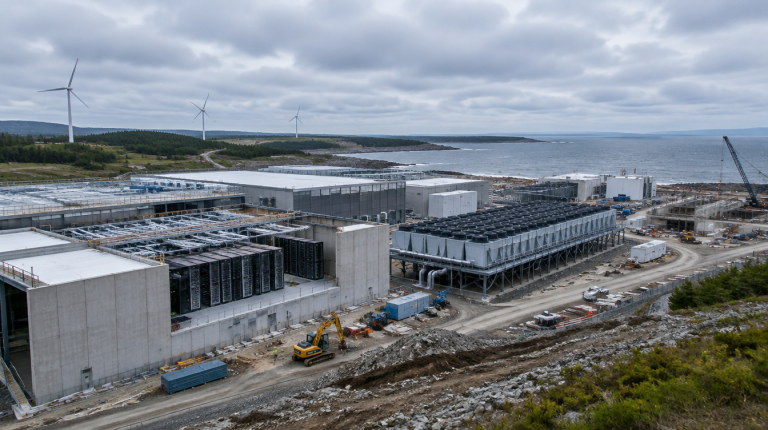
The pure pretraining phase, during which the model builds fundamental language and code understanding, was reportedly run on 6,144 GPUs of NVIDIA’s latest GB300 NVL72 generation — in under four weeks. A reinforcement learning (RL) phase followed, in which the model is further refined through repeated trial and evaluation of its own solutions. With more than 100 million so-called rollouts — complete runs in which the model solves a task and receives feedback for it — Reflection AI itself calls this phase one of the largest RL training runs ever conducted by an open lab. This claim comes directly from Reflection AI and has not yet been independently verified by a third party. It’s still noteworthy, because RL training for coding agents is currently considered one of the most compute-intensive and important steps for making models reliable at multi-step tasks such as fixing software bugs.
Reflection AI Beam in benchmark comparison
Benchmarks are standardized test procedures used to make the performance of AI models comparable. For Beam, Reflection AI published four key benchmarks, whose values have since also been picked up and cited by independent analysis platforms such as Stack Futures and spke.com (The Decoder).
| Benchmark | Reflection AI Beam | Comparison values |
|---|---|---|
| SWE-bench Verified | 80.9% | Inkling (Thinking Machines): 77.6% / Nemotron 3 Ultra (NVIDIA): 70.7% |
| Terminal-Bench 2.1 | 80.1% | GLM 5.2: 81.0% / DeepSeek V4.1 Flash: 90.6% |
| AIME 2026 | 97.8% | — |
| GPQA Diamond | 90.5% | — |
SWE-bench Verified is considered one of the industry’s most meaningful tests for real-world software engineering ability: models must independently resolve real bug reports sourced from GitHub repositories. At 80.9 percent, Reflection AI Beam positions itself clearly ahead of two well-known US competitor models. On Terminal-Bench 2.1, which measures the ability to execute complex tasks via the command line, Beam sits at 80.1 percent — just behind GLM 5.2 and noticeably behind the Chinese model DeepSeek V4.1 Flash, which reaches 90.6 percent here. The AIME 2026 (mathematical reasoning) and GPQA Diamond (graduate-level scientific question answering) scores are very high at 97.8 and 90.5 percent respectively, underscoring the model’s reasoning strength.
“Beam achieves reasoning performance comparable to GLM-5.2 at three to four times lower inference compute,” is how Reflection AI itself frames it.
Important for context: all figures cited come primarily from Reflection AI’s own launch post. External sources such as Stack Futures and spke.com have picked up these figures and incorporated them into their comparison analyses, but a complete, independent re-measurement under identical test conditions by a party unaffiliated with Reflection AI is still outstanding. The efficiency claim — three to four times lower inference compute compared to GLM-5.2 — is explicitly described by Reflection AI itself as its own estimate, not an independently measured value.
Where does Beam stand in the global race?
Industry observers offer a nuanced assessment. On one hand, Reflection AI Beam is currently considered the most capable open-weight model for coding and reasoning tasks developed outside China. That’s notable, since in recent years Chinese labs in particular — such as DeepSeek and Moonshot (Kimi) — have taken the lead among top open models.
On the other hand, Beam still trails the current top Chinese models on raw benchmark scores. Both Kimi K3 and DeepSeek V4.1 Flash outperform it in some areas, such as Terminal-Bench 2.1.
For the European and US markets, this means: Beam closes a gap for open-source, Western-developed top models, but it’s not objectively the strongest available option in every discipline. One practical point worth noting: according to its own model card, Beam was trained predominantly for English-language content. Anyone wanting to use the model for non-English use cases beyond pure code should run their own tests beforehand.
Availability, formats, and license of Reflection AI Beam
Reflection AI has released the model weights in three different formats, differing mainly in storage footprint and precision:
- BF16: about 933.81 GiB, highest precision, largest storage footprint
- FP8: about 468.72 GiB, reduced precision, roughly half the storage footprint
- NVFP4: about 273 GiB, a heavily compressed format for especially resource-efficient operation
An optional DFlash2 speculative-decoding drafter model is available for all three variants. This technique speeds up text generation: a smaller “draft model” makes suggestions that the main model only needs to verify rather than fully recompute, which can noticeably increase response speed in practice.
Access options at a glance:
- Hugging Face (huggingface.co/reflection): direct download of the model weights under Apache 2.0
- developers.reflection.ai: technical documentation and integration guides
- platform.reflection.ai: free beta access to the hosted model without your own infrastructure
- AWS SageMaker JumpStart: hosting via an established cloud partner
This broad availability significantly lowers the barrier to entry — developers can choose between self-hosting and hosted options depending on available hardware and use case.
Why this matters for developers and companies
Several practical implications follow from the release of Reflection AI Beam. Companies that, for privacy or compliance reasons, don’t want to send data to external API providers now have — with an open-weight model of this performance class — an option for self-hosted operation, provided the necessary GPU infrastructure is available or sourced via cloud partners like AWS. The NVFP4 variant, at roughly 273 GiB, significantly lowers the entry barrier compared to the full BF16 version. For developers already working with coding assistants or agentic workflows, the SWE-bench Verified placement gives a concrete reference point for practical suitability in automated software bug fixing.
Conclusion and next steps
The release of Reflection AI Beam marks a notable step for open AI models outside China. With 501 billion total parameters, a 1 million token context window, and benchmark scores that outperform established competitor models in several disciplines, Beam positions itself as a serious option for coding and reasoning workloads. The Apache 2.0 license and availability in three different sizes ease both self-hosting and integration via hosted services. At the same time: the core performance figures come primarily from Reflection AI itself, independent reproductions are still pending, and on direct comparisons, Chinese models like DeepSeek V4.1 Flash still lead in individual benchmarks. Anyone evaluating Beam should run their own tests based on concrete use cases — for example via the free beta access at platform.reflection.ai or by downloading the weights directly from Hugging Face. For non-English use cases beyond pure code in particular, a cautious, step-by-step evaluation is recommended before switching over production systems.