A network that managed more than $2.2 billion in deposited funds in the summer of 2024 has shrunk to a fraction of that within just over two years — and is now shutting itself down. The Blast layer-2 shutdown was officially announced on October 2, 2026, via the project’s account on X. Users now have only a few weeks left to secure their assets: the wind-down deadline ends on October 26, 2026.
For many in the crypto community, the news did not come as a complete surprise, since the network’s usage numbers had been declining for months. Still, the Blast layer-2 shutdown marks a notable turning point: a project founded by one of the best-known names in the NFT space is pulling the plug after just over two years of operation.
Table of Contents
Key Takeaways
- The Blast team announced on October 2, 2026 that it is fully shutting down the Ethereum layer-2 network.
- Users must withdraw all assets to Ethereum mainnet by October 26, 2026 at the latest.
- Reason for the shutdown: ongoing operating costs permanently exceed the network’s revenue, and there is no economically viable path forward.
- Total Value Locked (TVL) collapsed from over $2.2 billion (June 2024) to roughly $31-32 million (early October 2026) — a decline of more than 98 percent.
- During the roughly one-week Lido unwind process, withdrawals are temporarily paused; afterward, the waiting period is shortened to 24 hours.
- The team explicitly warned against scammers impersonating Blast.
What does the Blast layer-2 shutdown actually mean?
Blast is a so-called yield-bearing layer-2 network built on Ethereum. That means users who deposited crypto assets on Blast automatically earned passive yield, since the deposited funds were allocated via liquid-staking services such as Lido, among others. The project was founded by Tieshun “Pacman” Roquerre, who had previously built the NFT marketplace Blur. That connection gave Blast significant attention and rapid user growth at launch.
With the announcement on October 2, 2026, this chapter now comes to a close. The team stated publicly on X that the network is being “wound down,” meaning gradually phased out. The reasoning given is sober and economic: the network’s ongoing operating costs permanently exceed the revenue generated by usage of the layer-2 network. According to the team, no realistic path back to economic sustainability was identified.
This kind of decision is not an everyday occurrence in the world of layer-2 networks. Many L2 projects struggle with fluctuating usage, but a complete, orderly shutdown with a clear deadline is a rare, if transparent, step. The Blast layer-2 shutdown is therefore also being watched across the industry as a test case for how a crypto infrastructure project organizes an orderly retreat instead of simply discontinuing support.
Why TVL and usage collapsed so sharply
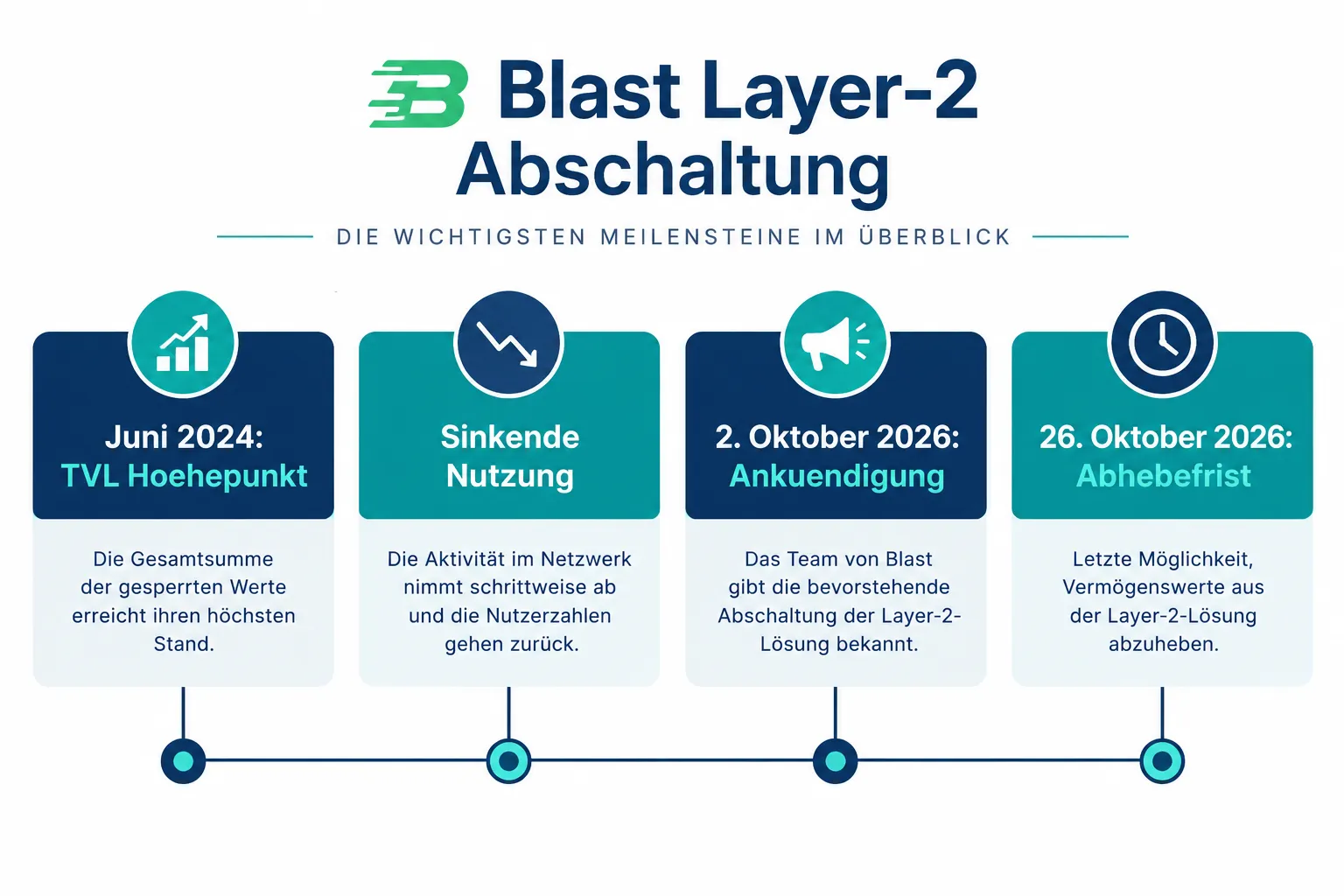
The numbers behind the Blast layer-2 shutdown speak for themselves. In June 2024, at peak usage, the network held more than $2.2 billion in Total Value Locked (TVL) according to multiple independent sources — a figure indicating how much capital is bound up in a network’s smart contracts overall. By early October 2026, shortly before the shutdown announcement, that figure had fallen to roughly $31-32 million.
That corresponds to a decline of more than 98 percent within just over two years. Even in the volatile crypto market, a drop of this magnitude is exceptional.
| Point in time | Total Value Locked (TVL) | Change |
|---|---|---|
| June 2024 | over $2.2 billion | Peak |
| Early October 2026 | roughly $31-32 million | down over 98 percent |
Several factors likely contributed to this decline, even though the team itself primarily cites the lack of economic viability as the reason. Layer-2 networks have been competing for liquidity and user attention in an increasingly saturated market since 2024. Many projects that launched with high initial incentives such as token airdrops and yield promises saw significant user attrition once those incentives expired. The BLAST token itself also lost significant value following the shutdown announcement; market reports point to double-digit percentage losses within 24 to 48 hours of the news, as well as a price level roughly 99 percent below the token’s all-time high. These figures are provided here strictly for factual context on the market reaction and do not constitute financial or investment advice.
Blast shutdown timeline: what users need to know now
The key date for all Blast users is October 26, 2026. By this date, all assets must be withdrawn from the Blast network back to Ethereum mainnet. Anyone who misses this deadline takes on unnecessary risk, since no regular withdrawal infrastructure is expected to remain available once the network has been fully wound down.
The technical wind-down process unfolds in several phases:
- Announcement phase (from October 2, 2026): The team informs users via X and official channels about the shutdown and timeline.
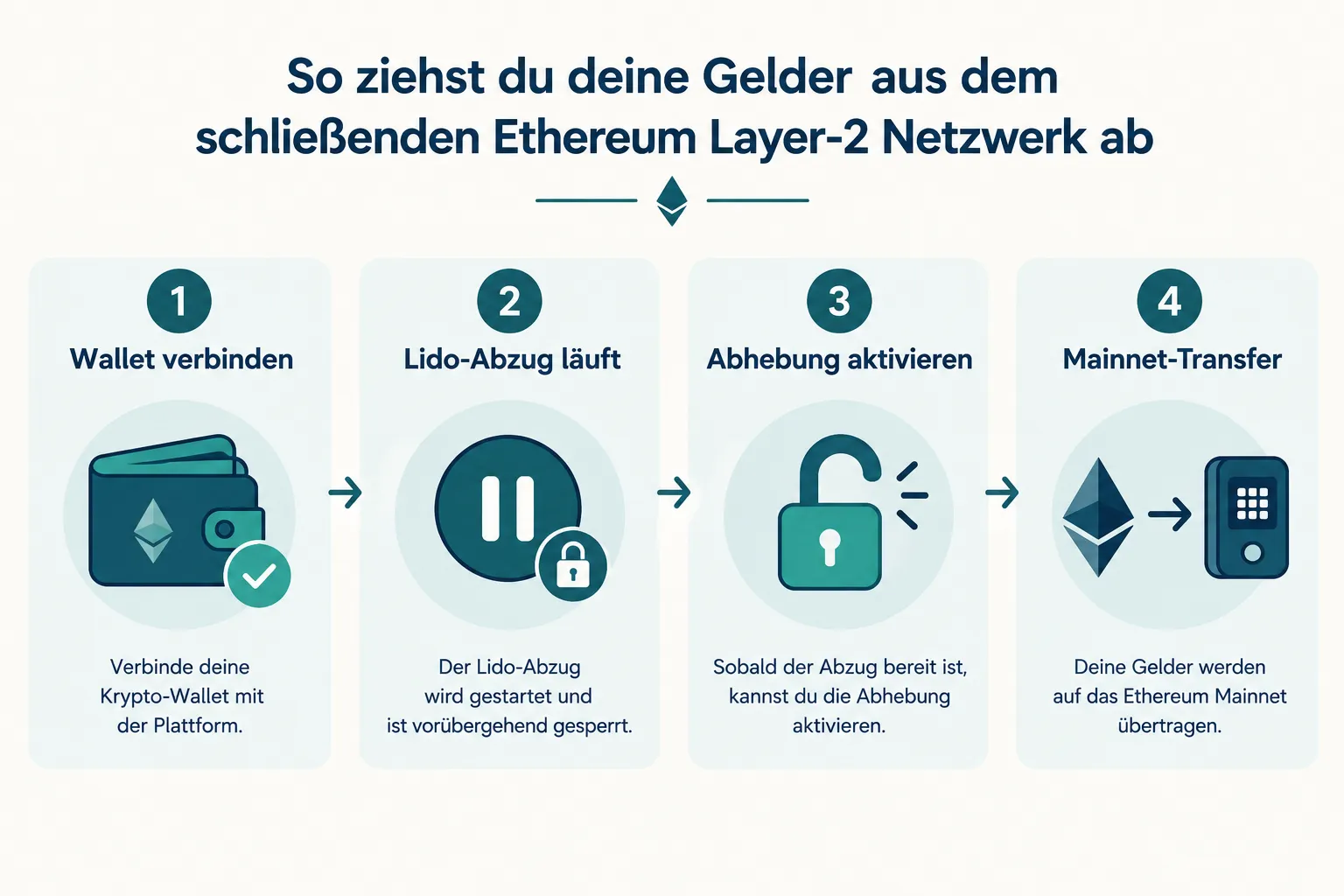
- Lido unwind phase (roughly one week): Blast withdraws the assets it held in the Lido liquid-staking protocol. During this roughly one-week phase, regular withdrawals from the network are temporarily unavailable.
- Shortened withdrawal phase: After the Lido unwind is complete, the normally longer withdrawal delay is shortened to 24 hours, allowing users to retrieve their funds more quickly.
- Deadline (October 26, 2026): Final date to successfully transfer assets to Ethereum mainnet.
What matters most for users is the temporary freeze during the Lido unwind phase. Anyone attempting to withdraw funds during this time will find the function unavailable. This does not mean the funds are lost — only that the technical process of releasing liquidity needs some time. Still, given the tight overall deadline, users should not wait until the last minute.
Security risks during the Blast layer-2 shutdown
Periods like this, when many users need to transact simultaneously and are under time pressure, are historically a favored target for scammers. The Blast team has therefore explicitly warned against individuals and channels posing as official project representatives to trick users into entering wallet credentials or making fraudulent transactions.
The following precautions are generally recommended in situations like this:
- Use only official, verified channels of the Blast project for withdrawal instructions.
- Do not open private messages with links from unknown senders claiming to offer “help” with withdrawals.
- Never share seed phrases or private keys with anyone, including supposed support staff.
- Carefully check the destination address and the website URL before every transaction.
- When in doubt, carry out transactions via the official, directly verified project website rather than via links shared on social media.
“The ongoing costs of maintaining the chain exceed the revenue generated by the L2, and we do not see a credible path to making the chain economically sustainable” — paraphrased core statement from the Blast team’s official announcement
This fraud warning underscores that while the actual technical wind-down appears comparatively straightforward, the surrounding environment of misinformation and phishing attempts poses a serious risk to users.
What the Blast shutdown means for the Ethereum ecosystem
Blast’s shutdown feeds into a broader discussion about the economic viability of layer-2 networks within the Ethereum ecosystem. L2 solutions were originally developed to process transactions faster and more cheaply than directly on Ethereum mainnet. Their business model typically relies on generating fee revenue from network usage to cover infrastructure costs.
When usage drops sharply, as in Blast’s case with a TVL decline of over 98 percent, that model quickly becomes unprofitable. Developers and project teams across the Ethereum ecosystem are likely to view the Blast layer-2 shutdown as a cautionary tale: rapid initial user growth, often driven by token incentives and yield promises, does not guarantee long-term, organic usage.
For DeFi users and developers who operate or use applications built on Blast, the shutdown creates concrete action items: smart contracts deployed on Blast lose their functional basis once the network is fully wound down. Anyone running their own applications or integrations on Blast should therefore review technical migration steps in parallel with withdrawing assets — for example, moving to another Ethereum layer-2 network or to mainnet itself.
Frequently asked questions about the Blast layer-2 shutdown
By when do funds need to be withdrawn? The wind-down deadline ends on October 26, 2026. By this date, all assets should be transferred from the Blast network to Ethereum mainnet.
Why are withdrawals temporarily unavailable? During the roughly one-week process in which Blast withdraws its Lido-held liquid-staking positions, regular withdrawals are technically disabled for a time.
Is the withdrawal waiting period changing? Yes. After the Lido unwind is complete, Blast is shortening the normal withdrawal delay to 24 hours, allowing users to retrieve their funds more quickly.
What is currently the biggest risk? Besides time pressure from the deadline, the Blast team has explicitly warned about scammers posing as official project representatives to deceive users.
Conclusion: act now instead of waiting
The Blast layer-2 shutdown marks the end of a project that was once among the fastest-growing layer-2 networks in the Ethereum ecosystem. The decline in TVL from over $2.2 billion to roughly $31 million within just over two years shows how quickly the economic foundation of a crypto infrastructure project can change.
For anyone still holding assets on Blast, the main takeaway now is: don’t wait until the last week. The combination of the temporary freeze during the Lido unwind phase and the firm October 26, 2026 deadline leaves little room for delay. Those affected should take the following steps promptly:
- Check your Blast wallet balance and verify the current status of the withdrawal function via official channels.
- Initiate withdrawal early rather than waiting until just before October 26, 2026.
- Use only verified, official sources of information, and critically scrutinize any unsolicited messages offering “verification” or “help.”
- If you’re new to withdrawing crypto assets, our beginner’s guide to setting up and securing your first crypto wallet can help you handle wallets safely. Developers running their own applications on Blast should evaluate a migration strategy to another Ethereum layer-2 network or to mainnet in parallel.
The developments around Blast are a reminder for users across the DeFi space to regularly monitor usage and TVL data for the platforms where their own assets are held. This article is provided strictly for factual information about the officially confirmed facts and does not constitute financial or investment advice.