A small language model that gets roughly three-quarters cheaper while simultaneously becoming faster and more capable than its predecessor is rare in the history of major AI providers. That is exactly what Anthropic promises with the release of Claude Haiku 5.5 on October 7, 2026. The new model is not just a technical update — it is also a strategic signal shortly before a reportedly planned IPO of the company next month.
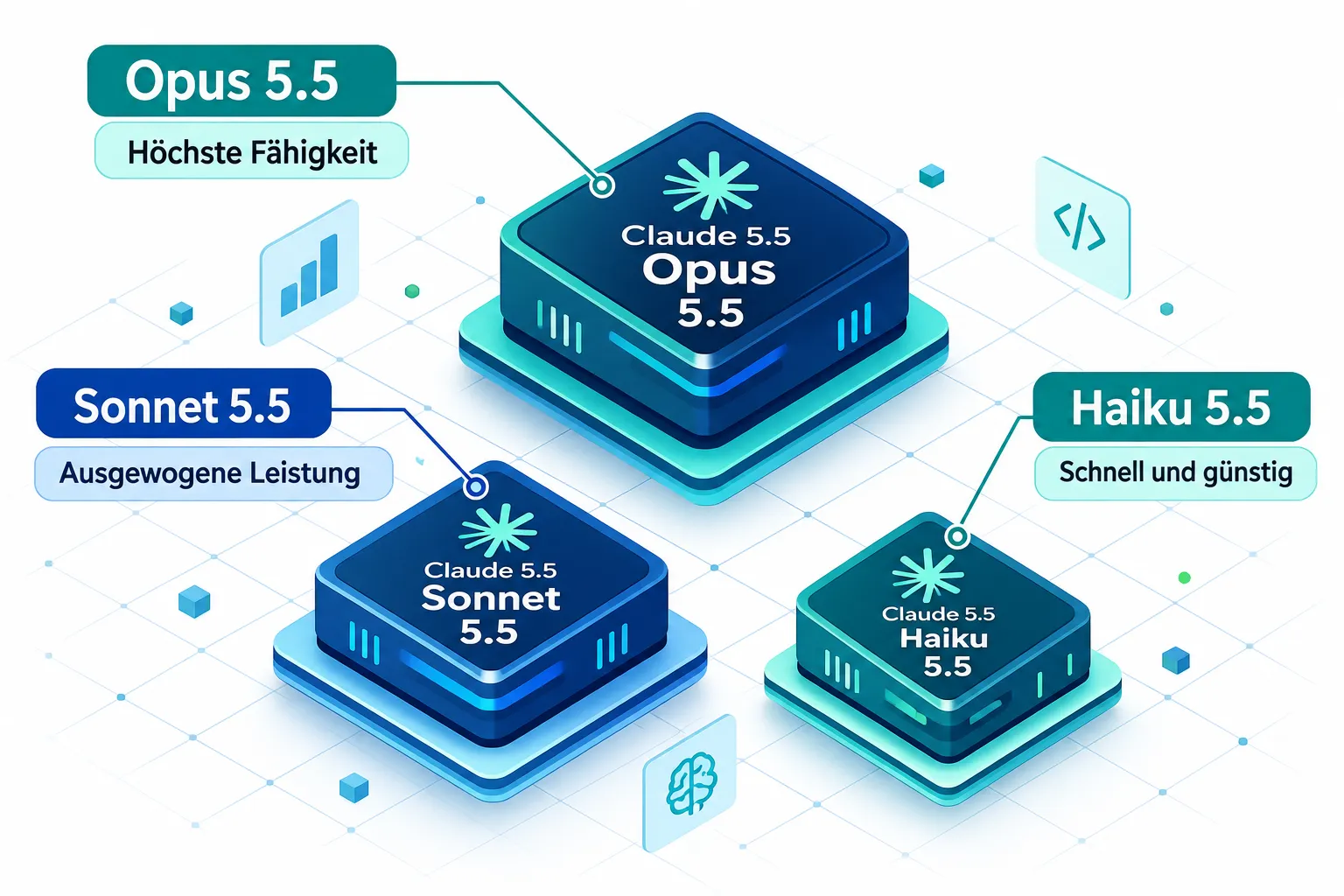
Claude Haiku 5.5 completes the Claude 5.5 model family, after Anthropic already introduced Opus 5.5 and Sonnet 5.5 in September 2026. While the larger models aim for maximum capability, Anthropic positions Haiku 5.5 as the cheapest, fastest, and most capable small model the company has ever released. For developers and IT decision-makers running AI features at scale, the pricing structure is likely to be of particular interest.
Table of Contents
Key Takeaways
- Claude Haiku 5.5 costs around 75 percent less on average than Claude Haiku 4.5, while being faster and more capable at the same time.
- For prompts under 100,000 tokens, input costs drop by 90 percent and output costs by 50 percent compared to the predecessor model.
- According to Anthropic, roughly 90 percent of all previous Haiku requests fall into this cheapest pricing tier.
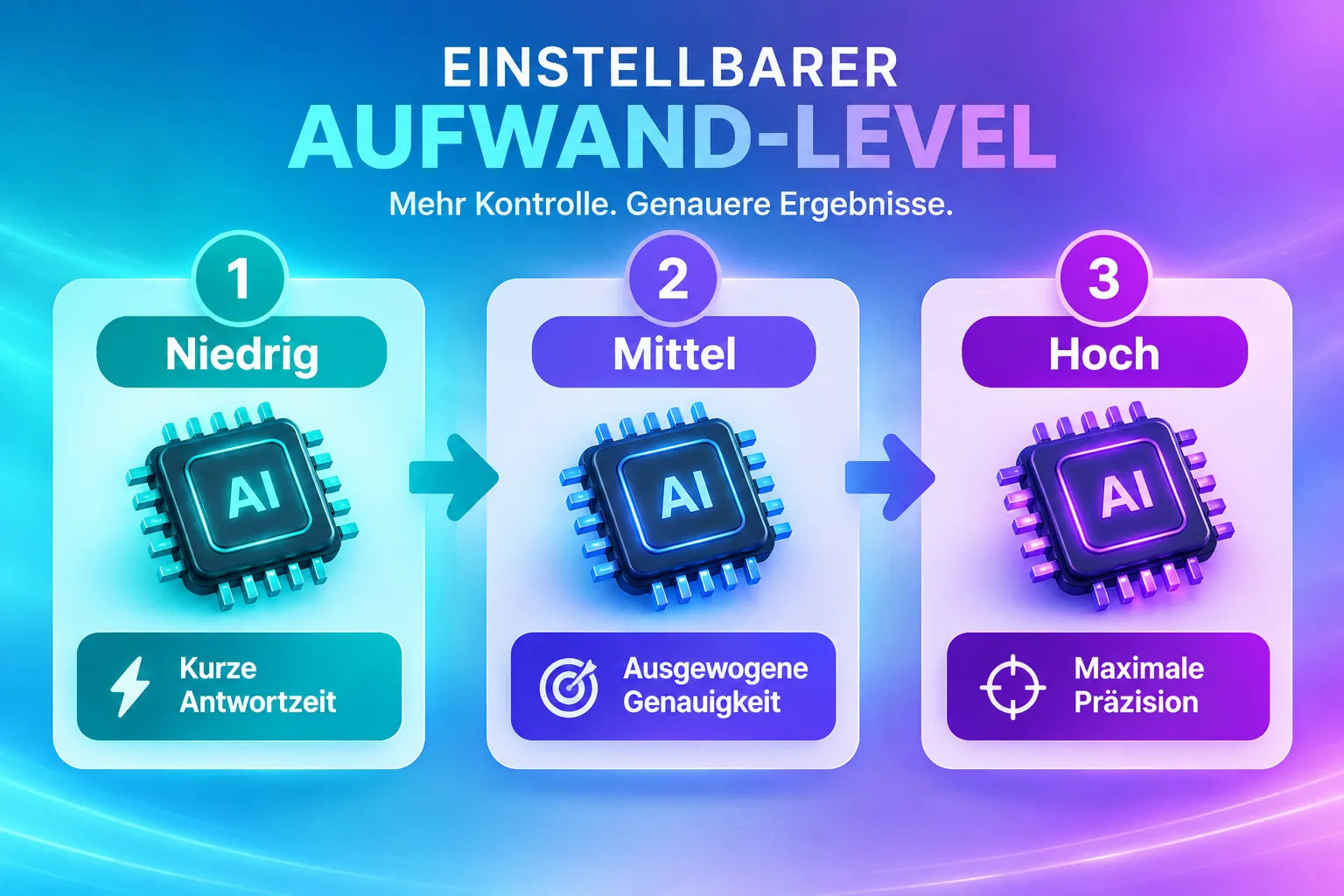
- A new, adjustable effort level lets developers control compute usage, latency, and cost directly.
- The launch falls into the preparation phase of a reportedly planned Anthropic IPO next month and is available via the company’s own platform as well as AWS, Google Cloud, and Microsoft Azure.
What Is Claude Haiku 5.5: Anthropic’s New Compact Model
Claude Haiku 5.5 is the third and smallest model in the Claude 5.5 generation. Anthropic has traditionally positioned the model as the fast, cost-efficient option for tasks where latency and throughput matter more than maximum reasoning depth. With this new version, however, the company promises a leap in cost efficiency not previously seen across earlier Haiku generations.
Technically, Haiku 5.5 sits below Sonnet 5.5 and Opus 5.5. In practice this means: complex, multi-step tasks remain the domain of the larger models, while Haiku 5.5 is built for clearly defined, repeatable, high-volume tasks. Anthropic emphasizes that despite its compact size, Haiku 5.5 is noticeably more capable than Haiku 4.5 — an indication that the efficiency gains stem not merely from shrinking the model, but from architectural and training improvements.
For companies running AI features in high-request-frequency products — chatbots, browser automation, or data pipelines — this exact combination of lower cost and higher quality is the decisive factor in model selection.
Claude Haiku 5.5 Pricing: The 75 Percent Cost Cut in Detail
The most striking part of the announcement is the pricing. Multiple independent sources, including Reuters reporting via bnd.com, TechStrong AI, The Hindu, and aiarabai.com, consistently confirm an average cost savings of around 75 percent compared to Claude Haiku 4.5.
The new pricing structure differentiates by prompt length for the first time:
| Prompt Size | Input Cost (per million tokens) | Output Cost (per million tokens) |
|---|---|---|
| Under 100,000 tokens | $0.10 | $0.50 |
| Over 100,000 tokens | $0.50 | $2.50 |
| Haiku 4.5 (predecessor, flat rate) | $1.00 | $5.00 |
For short and medium prompts, input costs drop by 90 percent and output costs by 50 percent compared to the predecessor model. Particularly relevant: according to Anthropic, roughly 90 percent of all previous Haiku 4.5 requests fell below the 100,000-token threshold. That means the vast majority of today’s users benefit directly from the steepest discount without needing to change their infrastructure.
"For most production workloads — summarization, support conversations, data extraction — nothing changes about usage, only about the bill."
Anthropic is additionally halving the cache-read price for Claude Sonnet 5.5, from $0.20 to $0.10 per million tokens. According to the company, this makes agentic workflows that repeatedly reference the same context around 20 percent cheaper. Combined with the Haiku 5.5 pricing, this creates a significantly cheaper overall cost profile for multi-step AI agents that use Haiku and Sonnet together.
Effort Level and Safety Guardrails in Claude Haiku 5.5
One of the most practical additions in Claude Haiku 5.5 is an adjustable effort level. Developers can use it to determine how much compute the model invests in a response. A low setting delivers faster, cheaper answers for simple tasks, while a higher setting allows more thorough processing for more complex requests.
This control is especially relevant for IT decision-makers, because it puts fine-tuning of latency, quality, and cost directly into development teams’ hands instead of relying solely on model selection. A customer support bot, for example, can run standard requests at a low effort level and automatically scale up only for more complex escalations.
At the same time, Haiku 5.5 is the first Haiku model to include built-in safeguards against a narrowly defined group of high-risk cybersecurity requests, such as automated penetration testing without verifiable authorization. Anthropic explicitly emphasizes that everyday tasks — text processing, support, coding assistance — are not affected by this. The measure targets misuse scenarios specifically and is not intended to limit the model’s broad usability.
Use Cases: Where Claude Haiku 5.5 Is Deployed in Practice
Anthropic names several concrete target applications for Claude Haiku 5.5:
- Document summarization of large volumes of text at low cost per request
- Data extraction from structured and unstructured sources
- Live customer support, where response time and cost per interaction are critical
- Voice agents that need to respond in real time
- Browser automation for repetitive web interactions
- Cost-efficient subagent alongside Opus 5.5 and Sonnet 5.5 for coding tasks, for example simple sub-steps within larger development workflows
This last use case illustrates a growing trend in the industry: instead of using a single large model for every step of a workflow, developers increasingly combine multiple model sizes. A powerful model like Opus 5.5 handles complex planning steps, while Haiku 5.5 serves as a cost-efficient helper for clearly scoped, simple sub-tasks.
Availability, API Access, and Cloud Partners
Claude Haiku 5.5 is available immediately via the Claude Platform under the model ID claude-haiku-5-5. The model can also be accessed via the three major cloud infrastructure providers:
- Amazon Web Services (Bedrock)
- Google Cloud (Vertex AI)
- Microsoft Azure
This broad availability across all major hyperscalers makes adoption easier for companies already working within a specific cloud environment, without needing to establish additional contractual relationships. For IT decision-makers, this mainly means that integrating Claude Haiku 5.5 can typically be embedded into existing procurement and compliance processes.
API Credits for Subscribers and the Connection to the IPO
Alongside the price cut, Anthropic is introducing new monthly API credits for existing subscribers. Max 5x users receive $100 in monthly API credits, Max 20x users receive $200, and Team subscribers can receive up to $500 per month. These credits can be applied directly to API usage, effectively lowering the barrier to entry for development teams looking to integrate Claude models into their own applications.
The timing of the announcement is notable. According to Reuters reporting, the launch of Claude Haiku 5.5 falls into the preparation phase of a reportedly planned Anthropic IPO next month. An aggressive price cut shortly before an IPO can be read from several angles: as a signal to institutional investors that Anthropic wants to expand market share in the fiercely contested segment of small, affordable models, but also as a response to growing competitive pressure from rival providers.
Claude Haiku 5.5 in the Competitive Landscape
The market for compact, cost-efficient language models has become significantly more crowded in 2026. Practically every major provider now has a “small” model variant in its portfolio, optimized for speed and low operating costs. A frequent comparison point in the industry is also GPT-6 Luna (comparable to GPT-6.1 Sol from OpenAI, which OpenAI recently released) from OpenAI — a similarly positioned but technically completely independent product from a different company that should not be confused with Claude Haiku 5.5. Developers comparing models should therefore always rely on concrete benchmark figures and real pricing sheets rather than naming similarities.
For Anthropic, the strategic advantage of Haiku 5.5 is that the company can now argue with a unified pricing model across three model sizes: Opus 5.5 for maximum capability, Sonnet 5.5 as the all-rounder, and Haiku 5.5 as the cost leader for high-volume business.
Frequently Asked Questions About Claude Haiku 5.5
Is Claude Haiku 5.5 suitable for production environments? Yes, the model has been generally available since October 7, 2026 via the Claude Platform and all three major cloud providers, and is explicitly aimed at production use cases with high request volume.
Is it worth switching from Haiku 4.5 to Haiku 5.5? Given the roughly 75 percent cost reduction combined with higher capability, testing the new version is worthwhile for most users, especially if the majority of requests fall under 100,000 tokens.
What distinguishes the effort level from simply choosing a different model? The effort level allows finer control within the same model, while choosing between Haiku, Sonnet, and Opus fundamentally changes the capability tier.
Conclusion and Next Steps
Claude Haiku 5.5 marks a significant step toward cheaper yet more capable AI models for mass deployment. The combination of an average 75 percent cost reduction, an adjustable effort level, and broad availability across all major cloud platforms makes the model an obvious option for developers and IT decision-makers running high-volume applications such as support, data extraction, and browser automation.
Teams already using Claude Haiku 4.5 should run a direct cost comparison based on their own token volumes, particularly with the 100,000-token threshold in mind. Those combining agentic workflows across multiple models should also factor the reduced Sonnet 5.5 cache pricing into their calculations. Given the timing shortly before the reportedly planned Anthropic IPO, it is also worth keeping an eye on the company’s further pricing and product developments in the coming weeks.