Just 101 minutes separated two product announcements on September 22, 2026. At 16:31 UTC, Anthropic released Claude Opus 5.5, and at 18:12 UTC, OpenAI followed with GPT-6 Sol and GPT-6 Luna. Anyone who thought Anthropic CEO Dario Amodei’s public call to slow the pace of AI progress, made just ten days earlier, would cool things down in the short term was proven wrong. This time, though, the race wasn’t about new capability records – it was about something just as important to developers and businesses: price.
For anyone following current AI news, this one is worth a closer look: Claude Opus 5.5 marks a strategic shift for Anthropic, and OpenAI’s response shows just how tightly matched the rivalry has become.
Table of Contents
Key Takeaways
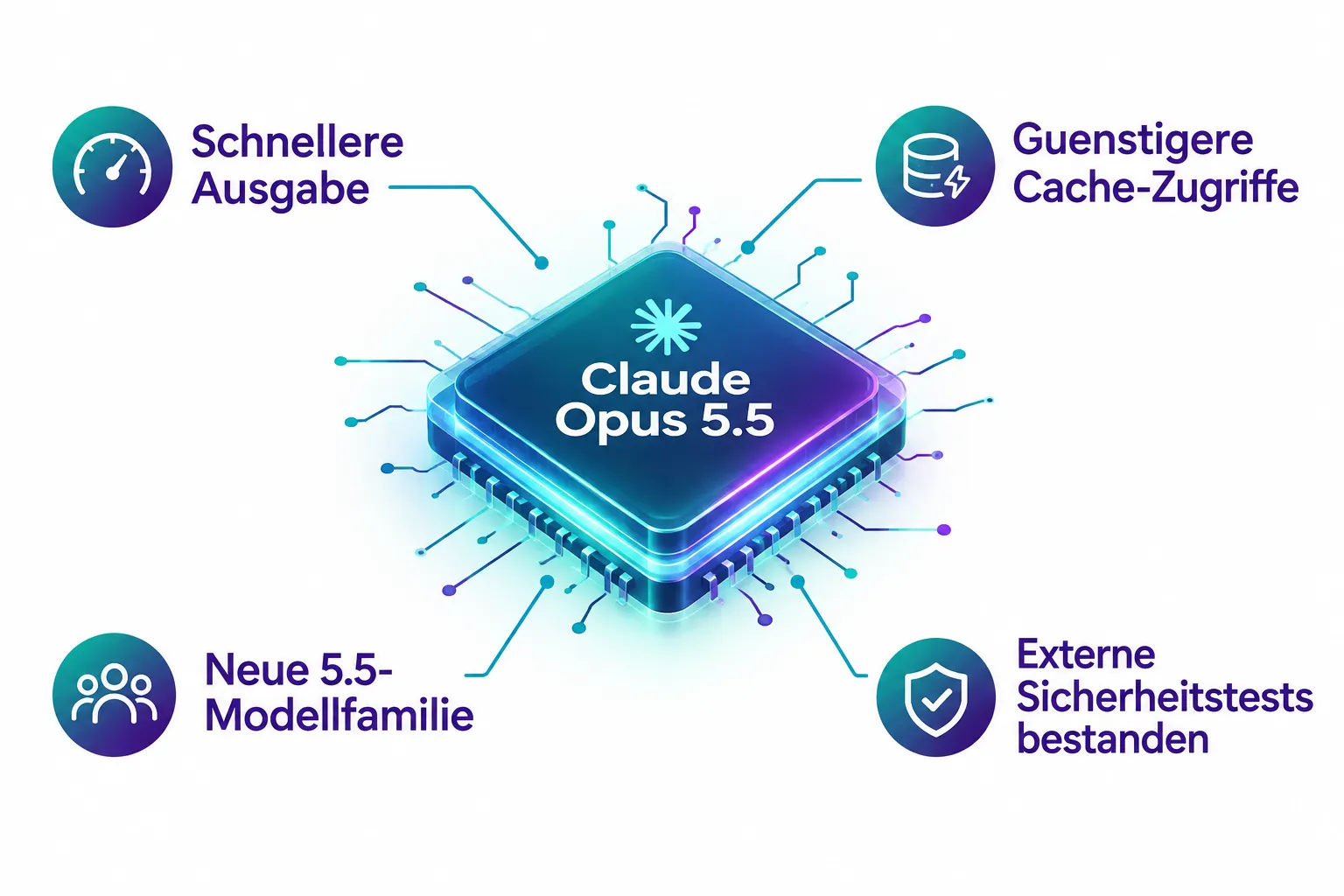
- Claude Opus 5.5 is the first model in Anthropic’s new Claude 5.5 family and costs up to 60 percent less for cache reads than Opus 5.
- Anthropic positions Opus 5.5 at the capability level of Claude Fable 5.1, but with roughly 40 percent lower operating costs and 30 percent faster output.
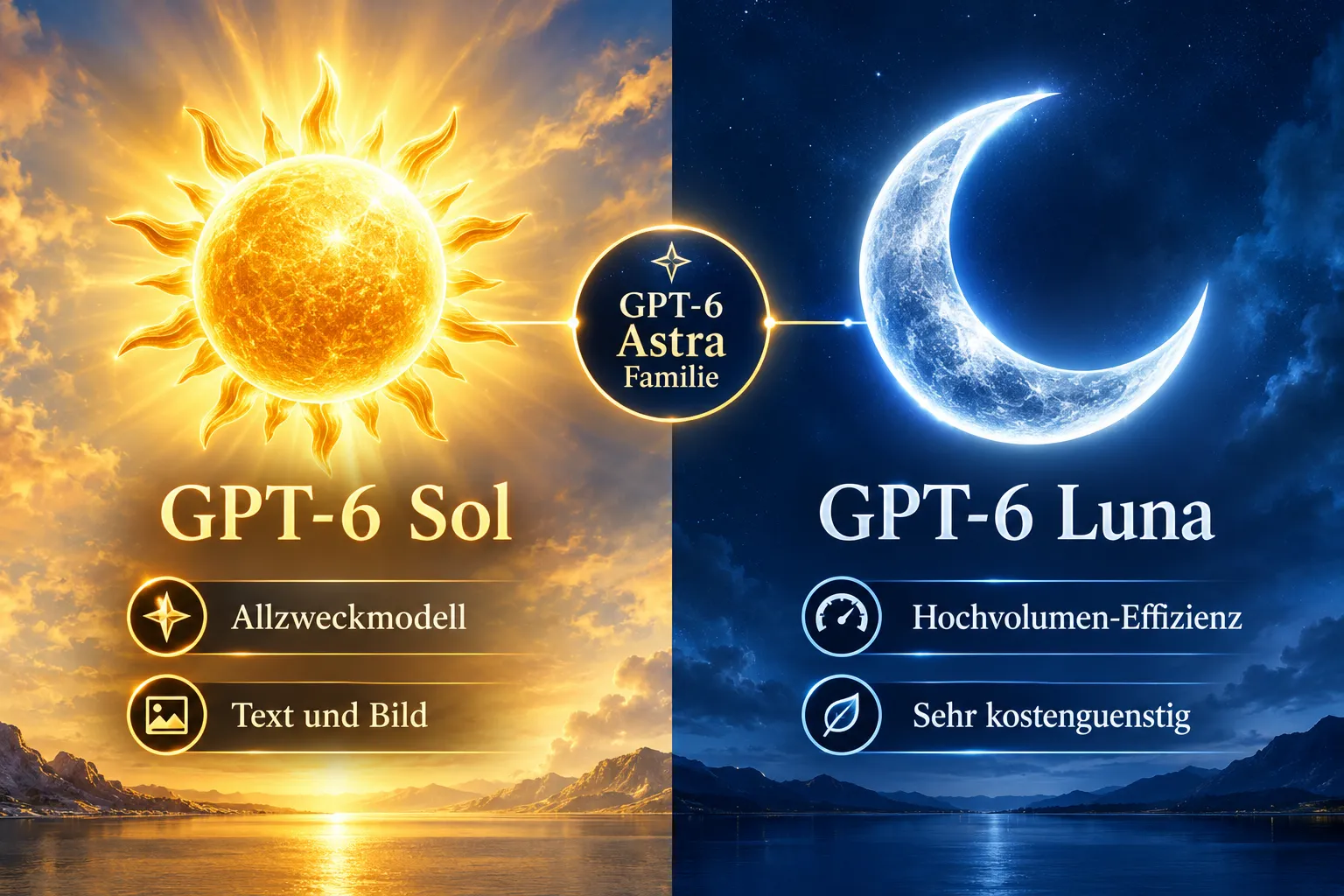
- OpenAI responded only about 90 minutes later with GPT-6 Sol and GPT-6 Luna – two cheaper variants of its GPT-6 Astra flagship.
- Both providers are cutting prices despite a joint public call to slow AI progress – the current focus is clearly on cost, not new record-setting capabilities.
- Anthropic and OpenAI remain separate companies with separate model families: Claude Opus 5.5 comes from Anthropic, while GPT-6 Sol and Luna come from OpenAI.
Claude Opus 5.5 in Detail: A New Model Family, Old Pricing Story
With Claude Opus 5.5, Anthropic officially kicks off a new model generation – and unusually so: rather than starting with smaller variants as before, Anthropic is leading directly with its flagship model. Claude Sonnet 5.5 and Claude Haiku 5.5 are expected to follow “in the coming weeks,” according to Anthropic.
In terms of capability, Opus 5.5 is expected to match the level of the previous flagship, Claude Fable 5.1, on most tasks. The real story, though, is the overhauled cost structure:
| Cost Item | Opus 5.5 | Change vs. Opus 5 |
|---|---|---|
| Input tokens | $4 / million | -20 percent |
| Output tokens | $20 / million | unchanged, as stated |
| Cache reads | $0.20 / million | -60 percent |
| Output speed | roughly 30 percent faster | – |
The cheaper cache reads in particular matter in practice. In agentic workflows and coding tasks – exactly the use cases tech-savvy beginners and developers typically rely on Claude for – repeated cache access accounts for the bulk of overall costs. A 60 percent cut here has a bigger impact on the final bill than a plain input-price reduction.
Anthropic also points to internal benchmarks such as Terminal-Bench 4.0 and FrontierCode v1.1, where Opus 5.5 reportedly beats both its own predecessor and OpenAI’s GPT-6 Astra – at roughly a fifth to 40 percent of the cost per task. As a real-world example, the company cites an early tester who reportedly completed a 680,000-line code migration in under a day – a task that would normally take a development team weeks.
Safety as a Second Major Selling Point
Alongside price, Anthropic is putting the safety of Claude Opus 5.5 front and center. The model was tested before release by external evaluators such as Frontier Design and METR, and it scores the best of any model Anthropic has tested on the company’s own “automated behavioral audit” – described by Anthropic as its most comprehensive alignment test.
Opus 5.5 is reported to take hard-to-reverse actions less often, to stray outside defined boundaries less often, and to be more robust against prompt injection than Opus 5.
Because the model is comparable to the more powerful Claude Mythos 5.1 in biology and cybersecurity, the same safeguards used for Fable 5.1 apply here: a “Life Sciences Verification Program” for vetted organizations, plus an expanded “Cyber Verification Program” for verified security researchers coming soon.
Claude Opus 5.5 is available immediately in the Claude apps, via the API, and through the three major cloud providers AWS, Google Cloud, and Microsoft Azure.
OpenAI’s Answer: GPT-6 Sol and GPT-6 Luna Take on Claude Opus 5.5
About 100 minutes after Anthropic’s announcement, OpenAI responded – an important point for anyone trying not to mix up the two companies: GPT-6 Sol and GPT-6 Luna come from OpenAI, not Anthropic, and are standalone models within the GPT-6 Astra product family [1][2].
Both models build on the advances of the GPT-6 Astra flagship introduced in early September 2026, but are specifically tuned for speed and cost [1][3]. The pricing at a glance:
| Model | Input Tokens | Output Tokens | Positioning |
|---|---|---|---|
| GPT-6 Sol | $2 / million | $10 / million | Balanced general-purpose model |
| GPT-6 Luna | $0.10 / million | $0.50 / million | Low-cost, high-volume applications |
That makes GPT-6 Sol roughly 50 percent cheaper than its predecessor, GPT-5.6 Sol, at that model’s promotional pricing [1][6][9]. GPT-6 Luna is cheaper still, by another order of magnitude, and is explicitly aimed at very high-volume applications where every cent per request counts [2][8].
Technically, both are reasoning models that process both text and image input, and both are accessible via the Responses API and the Chat Completions API [4][6]. OpenAI itself describes the new models as a kind of “mini-Astras” within the GPT-6 product line: Sol as a solid general-purpose model for everyday use, Luna as a lean variant for scaling and high-volume deployment [2][5].
Access is staggered: paying ChatGPT users on the Plus, Pro, Business, Enterprise, and Edu tiers, as well as Codex users, get access immediately, while free users can try GPT-6 Luna in the desktop app for now [1][3][7].
Context: A Price War Instead of a Capability Race
What makes this double launch notable is the timing. Just ten days before both announcements, Anthropic CEO Dario Amodei had publicly called for slowing the pace of AI progress – a call that OpenAI CEO Sam Altman had also publicly endorsed. That both companies nonetheless released new models within 90 minutes of each other looks contradictory at first glance. The key difference lies in the focus: this wasn’t about new record-setting capabilities, but almost exclusively about cutting costs.
Several trade outlets, including SiliconANGLE, 9to5Google, and Decrypt, along with well-known developer Simon Willison, characterized the close timing of the two announcements as a deliberately timed exchange between the two market leaders. Even Tesla and xAI chief Elon Musk, who had publicly backed the original call to slow down, commented on Anthropic’s launch with a brief “Congrats!” on X.
For developers, startups, and anyone using AI models in production, the practical takeaway is clear: near-frontier models are getting noticeably cheaper, without a corresponding new leap in capability expected any time soon. According to an analysis by The Register, Anthropic’s release cadence has already accelerated significantly – from roughly one new model per quarter in 2025 to nearly monthly releases in 2026. GPT-6 Sol and Luna, for their part, followed just 19 days after the Astra launch [1][7].
This acceleration can cautiously be read as follows: the competitive dynamic between Anthropic and OpenAI currently seems to be less about “who can do more” and more about “who can deliver cheaper and faster.” Whether this price war continues into 2027, or whether both companies pivot back toward new capabilities, remains pure speculation at this point – but the data available from September 2026 clearly points to a trend toward cheaper, near-frontier models.
Takeaway: What the Double Launch Means for Beginners and Developers
The launch of Claude Opus 5.5 and OpenAI’s near-simultaneous response with GPT-6 Sol and Luna show just how fast the AI market keeps moving despite public calls for restraint – though this round is clearly focused on falling prices rather than new records. For tech-savvy beginners and early adopters, there are some concrete takeaways:
- If you’re already working with Claude, factor Opus 5.5’s cheaper cache pricing directly into your existing coding or agentic workflows.
- If you’re planning cost-sensitive, high-volume applications, it’s worth comparing GPT-6 Luna against the cheaper Claude variants once Sonnet 5.5 and Haiku 5.5 become available.
- Businesses should review safety certifications like the Life Sciences Verification Program and the Cyber Verification Program if sensitive use cases are planned.
- It remains important to treat Anthropic and OpenAI as separate vendors with their own model families, so you don’t misattribute pricing or capabilities when comparing them.
The price war between Claude Opus 5.5 and GPT-6 Sol/Luna is likely to continue in the coming weeks as Anthropic rolls out the rest of the 5.5 family. For anyone using AI models day to day or in business, it’s worth keeping an eye on both providers’ price lists.
References
[1] Openai Launches Gpt 6 Sol And Luna – https://techcrunch.com/2026/09/22/openai-launches-gpt-6-sol-and-luna/ [2] Openai Releases New Gpt 6 Sol And Luna Models Sells Them As Mini Astras 2000815731 – https://gizmodo.com/openai-releases-new-gpt-6-sol-and-luna-models-sells-them-as-mini-astras-2000815731 [3] Openai Gpt 6 Sol Luna – https://www.macrumors.com/2026/09/22/openai-gpt-6-sol-luna/ [4] community.openai – https://community.openai.com/t/announcing-gpt-6-sol-and-gpt-6-luna-in-the-api-codex-and-chatgpt/1399925 [5] 4645643 Openai Expands Gptminus 6 Universe With Gptminus 6 Sol And Gptminus 6 Luna – https://seekingalpha.com/news/4645643-openai-expands-gptminus-6-universe-with-gptminus-6-sol-and-gptminus-6-luna [6] Openai Launches Faster Cheaper Gpt 6 Sol And Luna – https://www.testingcatalog.com/openai-launches-faster-cheaper-gpt-6-sol-and-luna/ [7] Gpt 6 Sol Release Date – https://cellcog.ai/blog/gpt-6-sol-release-date/ [8] economictimes.indiatimes – https://economictimes.indiatimes.com/tech/technology/openai-expands-gpt-6-lineup-with-cheaper-sol-and-luna-models/articleshow/134418905.cms [9] Openai Gpt 6 Sol Luna Launch Price – https://www.iphoneincanada.ca/2026/09/22/openai-gpt-6-sol-luna-launch-price/