You want to learn to program, but the very first decision already feels huge: Python? JavaScript? Something else entirely? The good news: there’s no single “right” first language — but there are clear criteria that will help you pick the right one for your goal.
Table of Contents
Why the first language matters (and why not too much)
Core programming concepts — variables, loops, conditionals, functions — are nearly identical across languages. Once you’ve solidly learned one language, picking up a second often takes weeks instead of months. So your first language matters less for long-term success and more for your motivation in the first few weeks: a language that gives you visible results quickly keeps you engaged, while one that frustrates you with cryptic error messages can make getting started unnecessarily hard.
Python at a glance
Python is rightly considered one of the most beginner-friendly languages. Its syntax reads almost like plain English, indentation replaces curly braces, and error messages are usually understandable. Python is used for:
- Data science and machine learning (NumPy, Pandas, PyTorch)
- Backend web development (Django, FastAPI, Flask)
- Automation and scripting (processing files, automating tasks)
- Scientific computing and teaching
Downsides: Python doesn’t run in the browser, it’s rarely the first choice for highly performance-critical applications (game engines, systems software), and if you want immediately visible “in the browser” results, you’ll need additional frameworks.
JavaScript at a glance
JavaScript is the only language that runs natively in every web browser. That makes it unique: you can add interactive code to an HTML document and see the result instantly in your browser — no extra software installation needed. With Node.js, JavaScript also runs server-side, so you can cover both frontend and backend with a single language. Use cases:
- Interactive websites and single-page apps (React, Vue, Svelte)
- Backend development with Node.js (Express, NestJS)
- Mobile apps (React Native) and desktop apps (Electron)
Downsides: JavaScript’s type system is loose and can lead to unexpected bugs early on (modern projects often solve this with TypeScript), and some concepts (asynchronous code, callbacks, promises) are more advanced for absolute beginners than Python’s linear programming style.
Other options worth a quick mention
Your first beginner language doesn’t have to be Python or JavaScript:
- Java: Widely used in enterprise and Android development, stricter syntax with more boilerplate, a solid entry point into object-oriented thinking.
- C#: Similar to Java, dominant in Windows and game development (Unity).
- Go: Modern, quick to learn, strong in backend and cloud development, but fewer beginner-focused resources than Python.
For most complete beginners, though, Python and JavaScript remain the most pragmatic choice, thanks to huge communities, endless free learning resources, and a low barrier to entry.
Python vs. JavaScript: Direct comparison
| Criterion | Python | JavaScript |
|---|---|---|
| Readability for beginners | Very high | High |
| Runs directly in the browser | No | Yes |
| Data science / AI | Market leader | Rarely used |
| Web development (frontend) | Not possible | Essential |
| Backend development | Very strong | Very strong (Node.js) |
| Immediately visible results | Medium | Very high |
Choosing the right language for your goal
Instead of asking “which language is better,” ask “what do I want to build?”
- Goal: web development (frontend/fullstack): Start with JavaScript — you can’t avoid the browser’s native language anyway, and you’ll see immediate visual results.
- Goal: data science, AI, or machine learning: Start with Python — the entire ecosystem (libraries, tutorials, job postings) is built around it.
- Goal: “I just want to learn to program,” no specific project yet: Python, thanks to its simpler syntax and gentler learning curve.
- Goal: automating everyday tasks: Python, thanks to its powerful standard library for files, systems, and scripting.
Our recommendation for beginners
There’s no dogma that actually helps here — but a pragmatic rule of thumb: if you’re unsure, start with Python, because its syntax distracts you the least from the actual programming concepts. If you already know you want to build websites, skip the debate entirely and start directly with JavaScript — you’ll learn the language and the web ecosystem you’ll need anyway at the same time. Both paths are valid, and as a web developer you’ll eventually learn both languages regardless.
Next steps
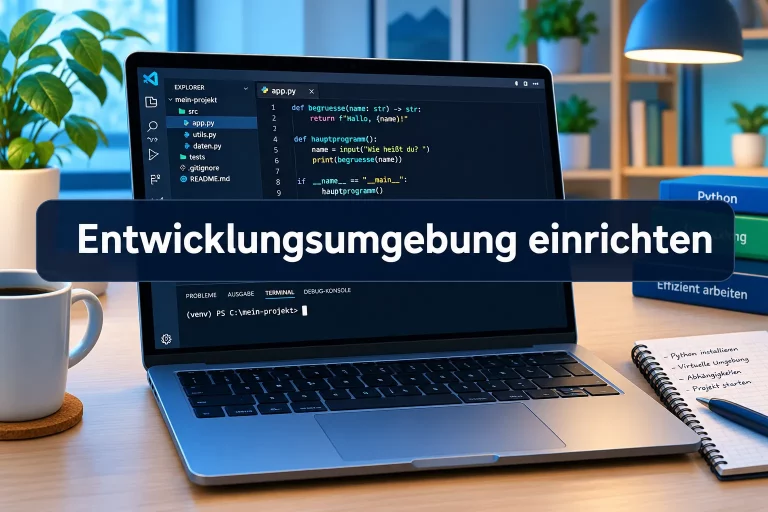
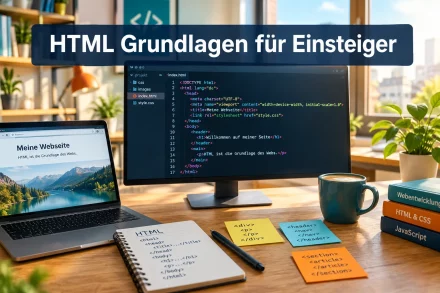
Whichever language you choose, your next step should be setting up your development environment. Our guide Setting Up Your Dev Environment: VS Code and Terminal Basics for Beginners walks you through it step by step. If your goal is web development, check out our HTML basics and CSS basics guides next — the foundation of every website. And if you’d like to understand what actually happens technically when you load a web page, read our article How Does the Web Work? Browsers, Servers, and HTTP Explained Simply.
Frequently Asked Questions
Should I learn Python or JavaScript as a beginner?
It depends on your goal: for web development, JavaScript is essential because it is the only language that runs directly in the browser. For data science, AI, or if you just want to learn programming in general, Python is often the better choice thanks to its simpler syntax.
How long does it take to learn a programming language as a beginner?
Solid basics (variables, loops, functions, simple projects) usually take 2 to 3 months of regular practice. Real job-ready productivity often takes 6 to 12 months.
Do I need to learn multiple programming languages?
Eventually yes, but not at the start. Once you solidly know one language, learning the next is much faster because core concepts transfer.
Is Python suitable for web development too?
Yes, on the backend with frameworks like Django or FastAPI. But in the browser itself (frontend), only JavaScript runs natively.
What is the biggest mistake when choosing a first programming language?
Spending too long agonizing over the choice. Any of the common beginner languages will get you there — what matters more is actually starting to practice.