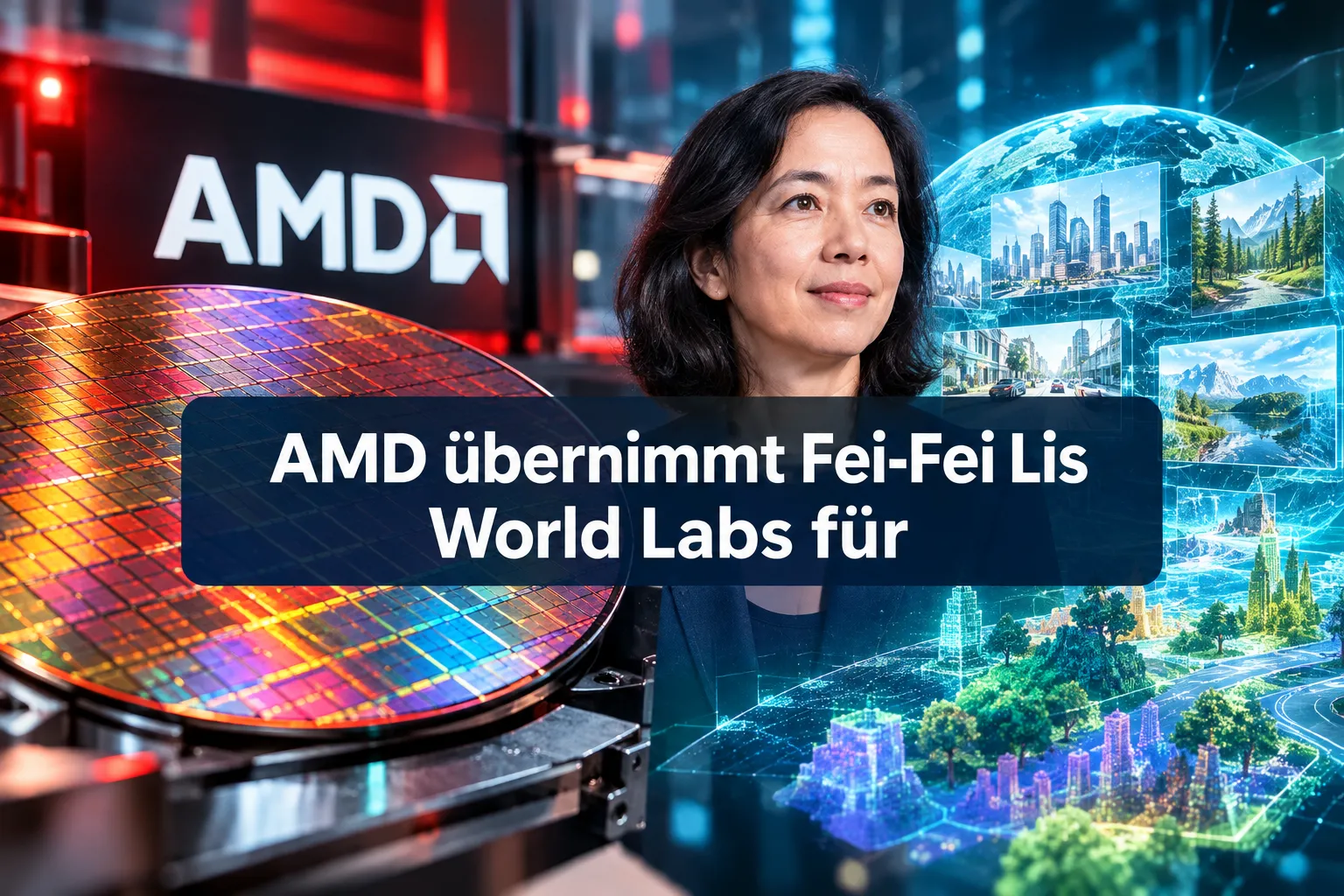
$8.2 billion in stock, a Stanford professor stepping in as the company’s future chief scientist, and an emerging field called “world models” — these three ingredients have made the AMD World Labs acquisition the talk of the tech industry since September 28, 2026. Chipmaker AMD (NASDAQ: AMD) isn’t just buying another AI startup here; it’s securing direct access to technology designed to help machines understand and simulate physical spaces. The deal fits into a broader wave of similar moves across the chip industry and shows just how blurry the line between hardware makers and AI research labs has become. Around the same time, Google’s Gemini 4 Argon has also been making waves in the AI world.
This article breaks down the confirmed facts about the AMD World Labs acquisition, explains the background on World Labs and Fei-Fei Li, and looks at what the deal means for the chip and AI industries as a whole.
Table of Contents
Key Takeaways
- On September 28, 2026, AMD announced a definitive agreement to acquire World Labs for roughly $8.2 billion in an all-stock deal.
- World Labs was founded by AI pioneer Dr. Fei-Fei Li and builds “world models” — AI systems that generate 3D environments for robotics and physically grounded AI.
- Once the deal closes, Fei-Fei Li will join AMD as Executive Vice President and Chief Scientist.
- The transaction is expected to close by the end of 2026, pending regulatory approval; until then, World Labs remains a separate entity.
- The acquisition follows a broader industry trend: chipmakers like AMD and Nvidia are increasingly buying AI research labs to tie hardware and software more closely together.
What’s Behind the AMD World Labs Acquisition
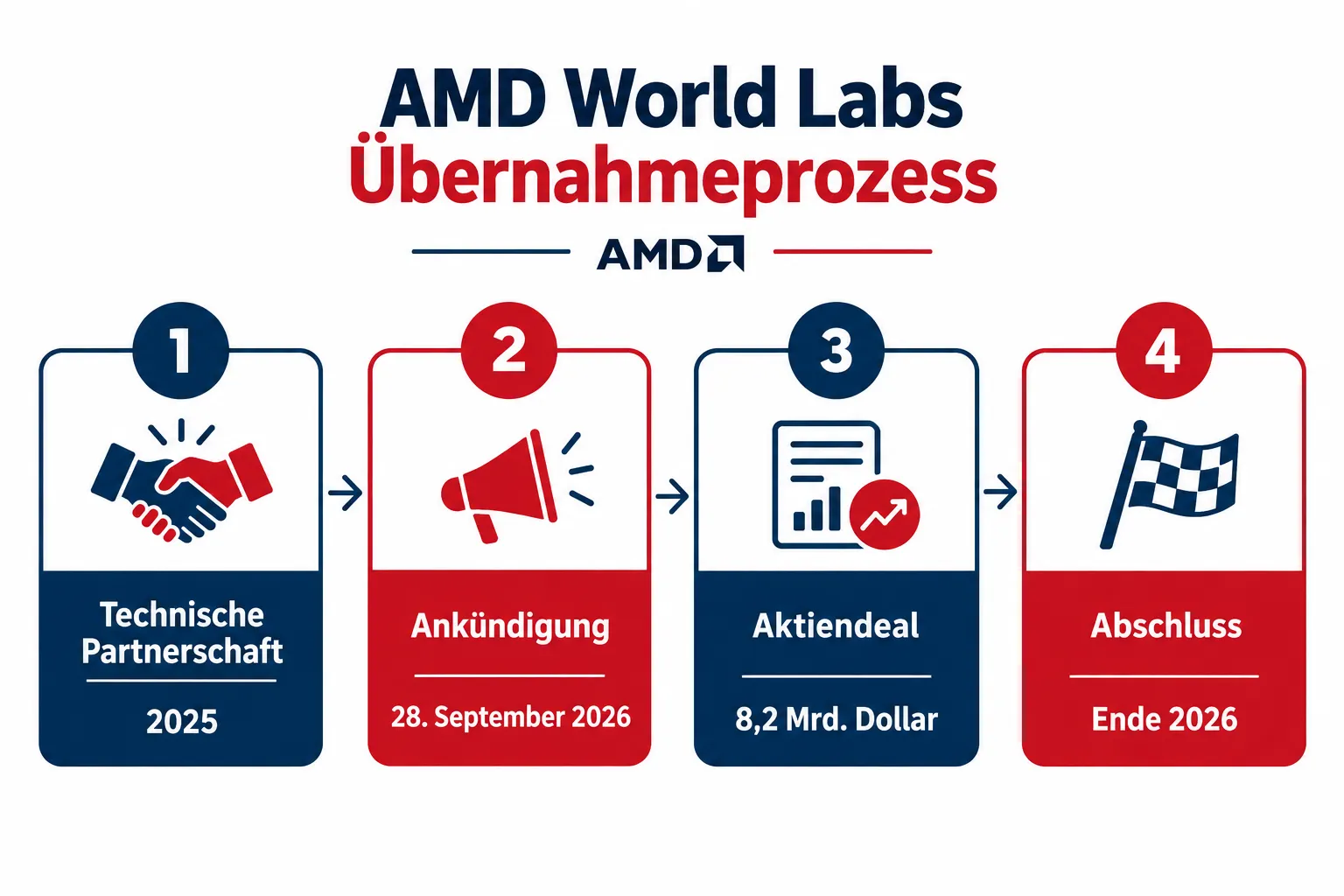
On September 28, 2026, AMD’s newsroom, the company’s investor relations team, and several independent outlets including CNBC, TechCrunch, and the Wall Street Journal all confirmed the same thing: AMD has signed a definitive agreement to acquire World Labs. The deal is valued at roughly $8.2 billion. What stands out most is the structure — this is an all-stock transaction, meaning no cash changes hands; AMD shares serve as the consideration instead.
That structure is no accident. All-stock deals let acquirers move large sums without straining their own liquidity, while also signaling confidence in their stock as currency for strategic buys. According to CNBC’s reporting, World Labs will continue operating as an independent entity until the transaction fully closes — a standard move to keep research running uninterrupted while regulatory reviews play out.
The AMD World Labs acquisition is expected to close by the end of 2026. As is typical for deals of this size, it remains subject to regulatory approval, including antitrust review in the United States and potentially other jurisdictions.
No Connection to Nvidia or OpenAI
One important clarification: World Labs is an independent company with no ties to Nvidia or OpenAI. AMD is the sole acquirer here. That distinction matters because, in the fast-moving AI industry, labs and investors get mixed up easily — especially since Nvidia recently made headlines of its own with its $12.9 billion acquisition of Hugging Face. The two deals are entirely separate and involve different companies.
Who Is Fei-Fei Li and What Does World Labs Do
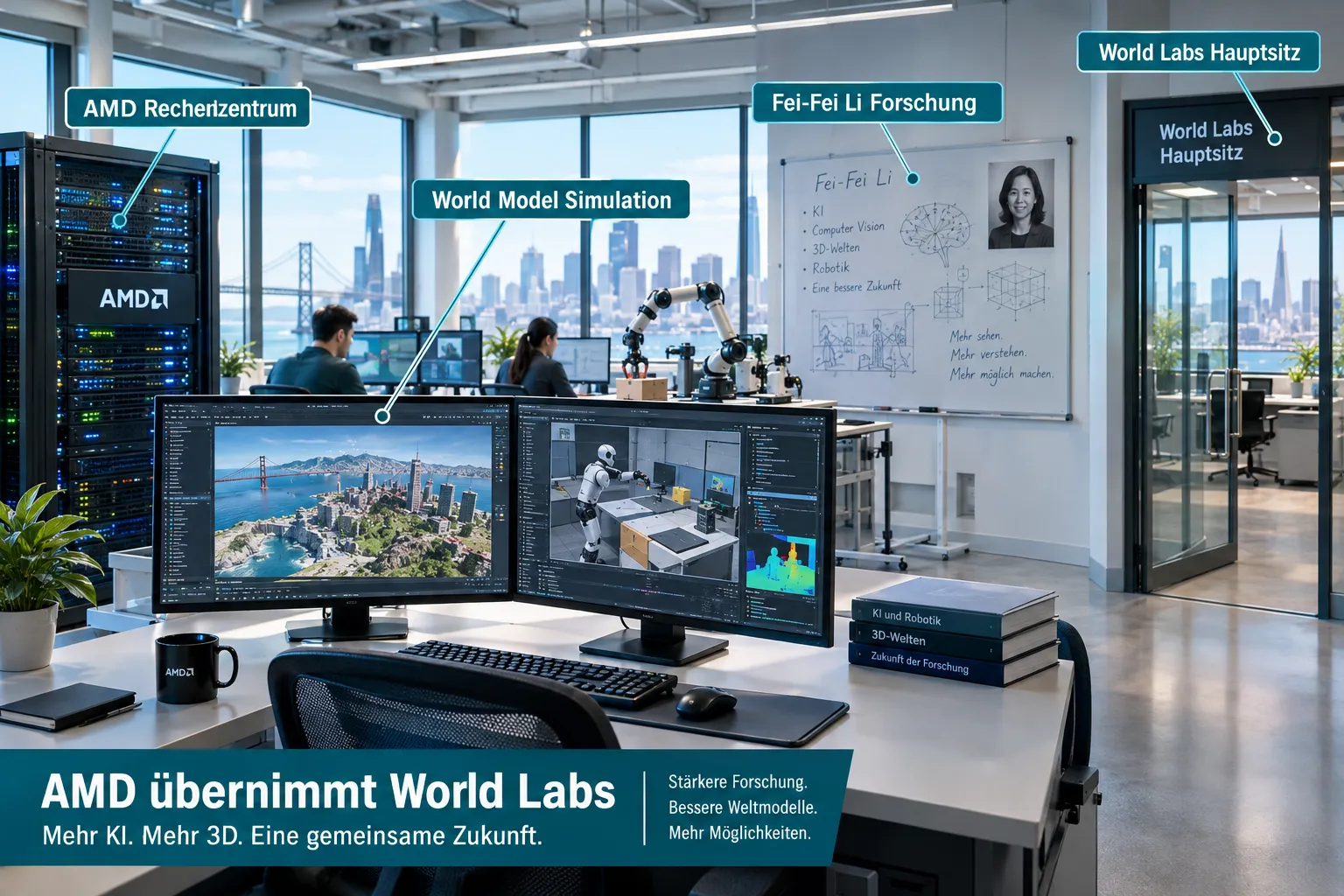
At the center of the AMD World Labs acquisition is one of the most recognized names in AI research: Dr. Fei-Fei Li. She taught as a professor at Stanford University and previously worked at Google AI Research. Among her peers, she’s regarded as one of the defining figures in modern computer vision research. With World Labs, she founded an AI research lab based in San Francisco that focuses on a specialized and increasingly important branch of AI: so-called “world models.”
World models are AI systems that don’t just process text or images — they generate and simulate three-dimensional environments. That capability matters most for two emerging fields:
- Robotics: robots need an understanding of space, depth, and physical relationships to move safely through the real world.
- Physically grounded AI applications: systems that don’t just “think” in the abstract but need to interact with the physical environment, for example in manufacturing, logistics, or autonomous navigation.
AMD and World Labs’ partnership actually predates this acquisition announcement. AMD had already invested in World Labs earlier, and the two companies have maintained a technical partnership since last year, focused in particular on two areas: inference optimization (running trained AI models efficiently) and training new models. This acquisition is therefore less a sudden move than the logical next step in an existing relationship.
Fei-Fei Li’s New Role at AMD
Once the transaction closes, Fei-Fei Li will join AMD as Executive Vice President and Chief Scientist. That title is more than symbolic — as Chief Scientist, she’s expected to play a central role in shaping AMD’s AI research strategy, a signal that AMD wants not just World Labs’ technology, but its scientific leadership fully integrated into the organization.
“The acquisition shows that chipmakers increasingly don’t just want to build tools for AI — they want to become AI research companies themselves.”
Why Chipmakers Are Now Buying AI Labs
The AMD World Labs acquisition isn’t an isolated event — it’s part of a much larger, industry-wide pattern. Chipmakers are increasingly investing directly in AI research and finished AI models rather than focusing solely on selling hardware. The goal is to tie hardware and software more tightly together, offering end-to-end solutions that span everything from chip architecture to the finished AI model.
An obvious comparison: Nvidia announced its acquisition of Hugging Face for roughly $12.9 billion. While that’s a completely separate company and a standalone deal, it illustrates the same strategic thinking driving the AMD World Labs acquisition.
The table below summarizes the key facts of the AMD World Labs acquisition:
| Aspect | Details |
|---|---|
| Acquirer | AMD (NASDAQ: AMD) |
| Target company | World Labs, San Francisco |
| Founder | Dr. Fei-Fei Li |
| Deal value | Approx. $8.2 billion |
| Deal structure | All-stock transaction |
| Announcement date | September 28, 2026 |
| Expected closing | By end of 2026, subject to regulatory approval |
| Fei-Fei Li’s new role | Executive Vice President and Chief Scientist at AMD |
The Strategic Logic: Controlling the Entire AI Stack
Why is this convergence of hardware and AI research so attractive to chipmakers? The answer lies in the so-called “AI stack” — the full chain running from compute chips through training infrastructure to deployment-ready AI models. Controlling multiple layers of that stack lets a company:
- Tailor hardware more precisely to the needs of specific types of AI models.
- Make inference more efficient, because model architecture and chip design are aligned.
- Bring its own AI products to market faster, without relying on outside research partners.
- Gain a competitive edge over vendors that offer only hardware or only software.
For AMD, integrating World Labs specifically means access to research on 3D environment simulation that can be optimized directly alongside its own chip architecture going forward. The existing technical partnership in inference optimization and training already provides a solid foundation to build on once the acquisition closes.
Potential Impact on Robotics and Physical AI
While concrete product plans haven’t been announced yet, the available facts point to one likely outcome: world models could play a key role in areas where AI systems need to interact with the physical world — think industrial robotics, autonomous systems, and simulation environments for training physical AI applications. Combining AMD’s compute hardware with World Labs’ research into generative 3D environments could open up new technical possibilities in these fields, though specific product announcements have yet to materialize.
What to Watch Next
Until the AMD World Labs acquisition actually closes at the end of 2026, several open questions are worth tracking:
- Regulatory review: How will antitrust regulators respond to a major chipmaker merging with a specialized AI research lab?
- Team integration: How will collaboration between AMD’s existing AI teams and the World Labs team under Fei-Fei Li’s leadership be organized?
- Product strategy: What specific products or platforms will emerge from combining AMD hardware with world-model technology?
- Industry reaction: Will other chipmakers follow suit and announce similar acquisitions of AI research labs?
For investors and industry watchers: the information presented here is for informational purposes only and does not constitute financial or investment advice. Anyone tracking this story further should keep an eye on official AMD communications as well as reporting from established business media.
Conclusion
The AMD World Labs acquisition marks a major step in AMD’s strategy to dig deeper into the AI value chain. With a deal value of roughly $8.2 billion, structured entirely in stock, AMD is securing not just technology for simulating three-dimensional environments but also the scientific expertise of Fei-Fei Li, who will take on a key role as Executive Vice President and Chief Scientist going forward. The technical partnership that AMD and World Labs have maintained since last year shows this is a deliberate continuation of an existing relationship rather than a hasty purchase.
The deal fits a clear industry trend: chipmakers increasingly want more control over the entire AI stack, from hardware to finished model. World Labs will remain a separate entity until the expected closing at the end of 2026 while regulatory review plays out. Readers who want to follow this story should watch for official AMD announcements and coverage from independent business media in the coming months to track how the AMD World Labs acquisition develops and what it means for products and markets.