One date is enough to reshape how millions of people use one of the world’s most popular AI assistants: October 9, 2026. From that day on, anyone using the Gemini app without a paid subscription is left with exactly one model, Gemini 3.5 Flash-Lite. Free users who could previously switch between several models depending on the task lose that flexibility entirely. Free Gemini access, once a menu of options, becomes a single, fixed choice for anyone unwilling to pay for a Google AI subscription.
The change is confirmed in Google’s own support document, “Changes to Gemini model access and limits,” and was reported independently on October 3, 2026 by 9to5Google and ppc.land. Both outlets draw on the same official Google notice, which lends the facts more weight than a single announcement would.
Table of Contents
Key Takeaways
- Starting October 9, 2026, free Gemini app users have access to Gemini 3.5 Flash-Lite only, with Gemini 3.6 Flash and Gemini 3.1 Pro removed entirely, not just capped.
- Google AI Plus subscribers ($4.99/month) lose Gemini 3.1 Pro but keep Flash-Lite and Flash; the switch rolls out individually via email notification.
- Google AI Pro ($19.99/month) gains new access to “Deep Think” as compensation, a feature previously reserved for the most expensive Ultra tiers.
- The move follows just days after the September 30, 2026 announcement of Gemini 4 Argon, and analysts see it as a way to free up compute capacity for Pro and Deep Think requests.
- The backdrop is Google’s compute-based usage model, introduced back in May 2026, which replaced simple prompt counts with actual computational cost.
What’s Changing: Free Gemini Access Shrinks to Flash-Lite
Until now, users of the free Gemini app could choose between several models depending on the task and the quality they wanted. That flexibility disappears on October 9, 2026. Google states unambiguously in its support document that free users will have access exclusively to Gemini 3.5 Flash-Lite going forward. This is not a reduction in daily usage limits, it is a complete removal of access to the previous models Gemini 3.6 Flash and Gemini 3.1 Pro.
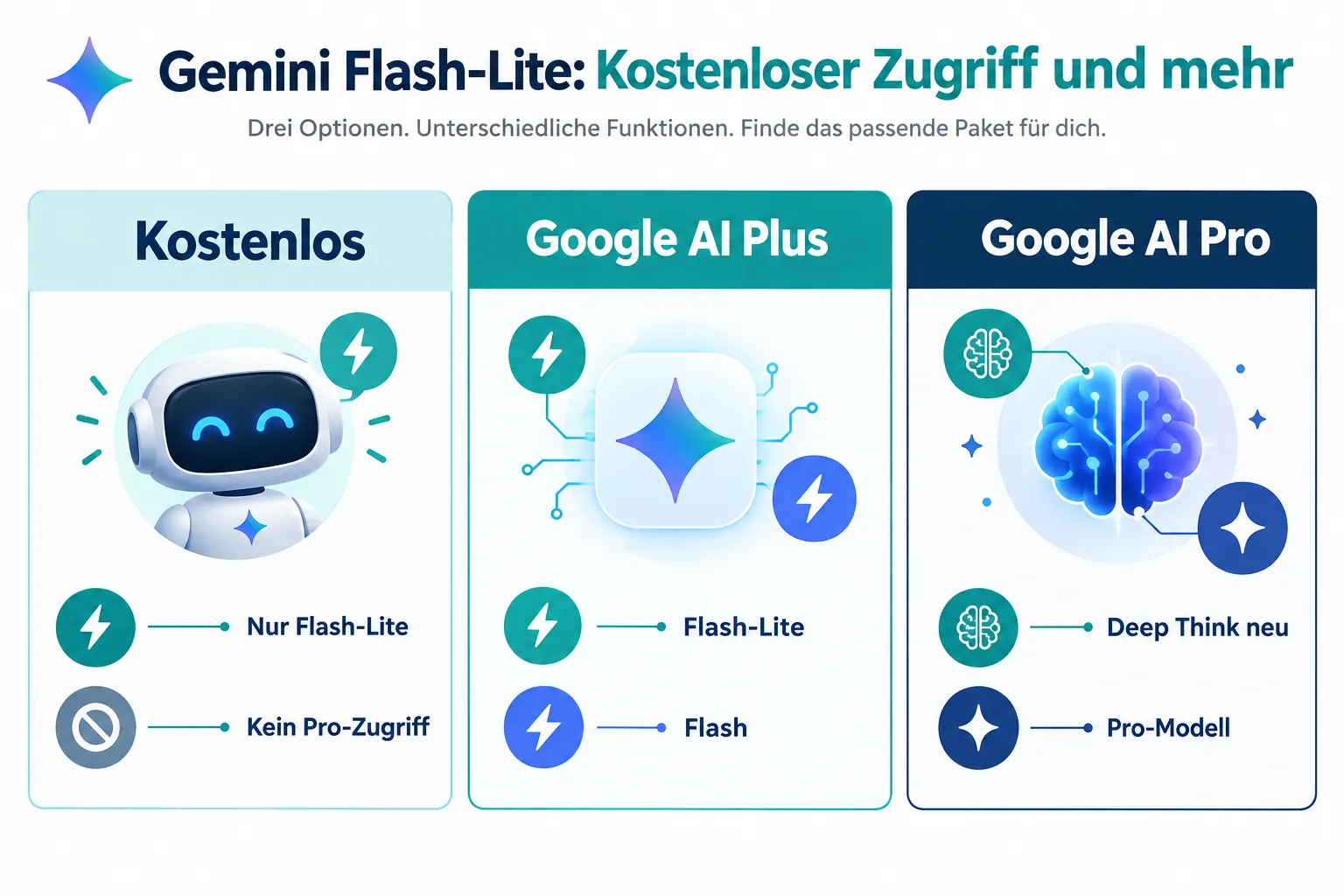
For paying users, the picture is more nuanced. Google AI Plus subscribers, who currently pay $4.99 a month, lose access to Gemini 3.1 Pro but keep both Flash-Lite and the more capable Flash model. This group won’t be switched over all at once on October 9; instead, each subscriber receives an individual email with their personal transition date.
The table below summarizes the new model lineup by subscription tier:
| Subscription Tier | Available Models After the Change | Notes |
|---|---|---|
| Free | Gemini 3.5 Flash-Lite | The only available model, no more Pro or Flash access |
| Google AI Plus ($4.99/month) | Flash-Lite, Flash | Gemini 3.1 Pro removed, individual transition date via email |
| Google AI Pro ($19.99/month) | Flash-Lite, Flash, Pro, new: Deep Think | Gains parallel reasoning, previously Ultra-exclusive |
| Google AI Ultra ($99.99 / $199.99) | Full model lineup, including Deep Think | Unchanged, still the top access tier |
The upgrade to the mid-tier plan stands out: Google AI Pro customers will gain access to “Deep Think,” a parallel-reasoning feature that until now was reserved exclusively for the pricier Ultra plans. Google isn’t just pushing capability upward across tiers, it’s also redistributing specific premium features between price points.
Rollout Timeline for the Free Gemini Access Change
The rollout timeline splits clearly between free and paying users.
Free users face a fixed deadline. On October 9, 2026, the restriction to Gemini Flash-Lite kicks in for every affected free account simultaneously. There is no grace period and no staggered rollout, the switch happens for the entire free user base on a single day.
Google AI Plus subscribers see a staggered rollout instead. Rather than one shared date, Google is notifying affected Plus customers individually by email about their personal transition date. That suggests Google is spreading the load of the switch over several days or weeks, likely to manage technical capacity in a controlled way.
Here’s a short chronological overview of the relevant events for context:
- May 2026: Google shifts its internal billing logic from simple prompt counts to a compute-based usage model.
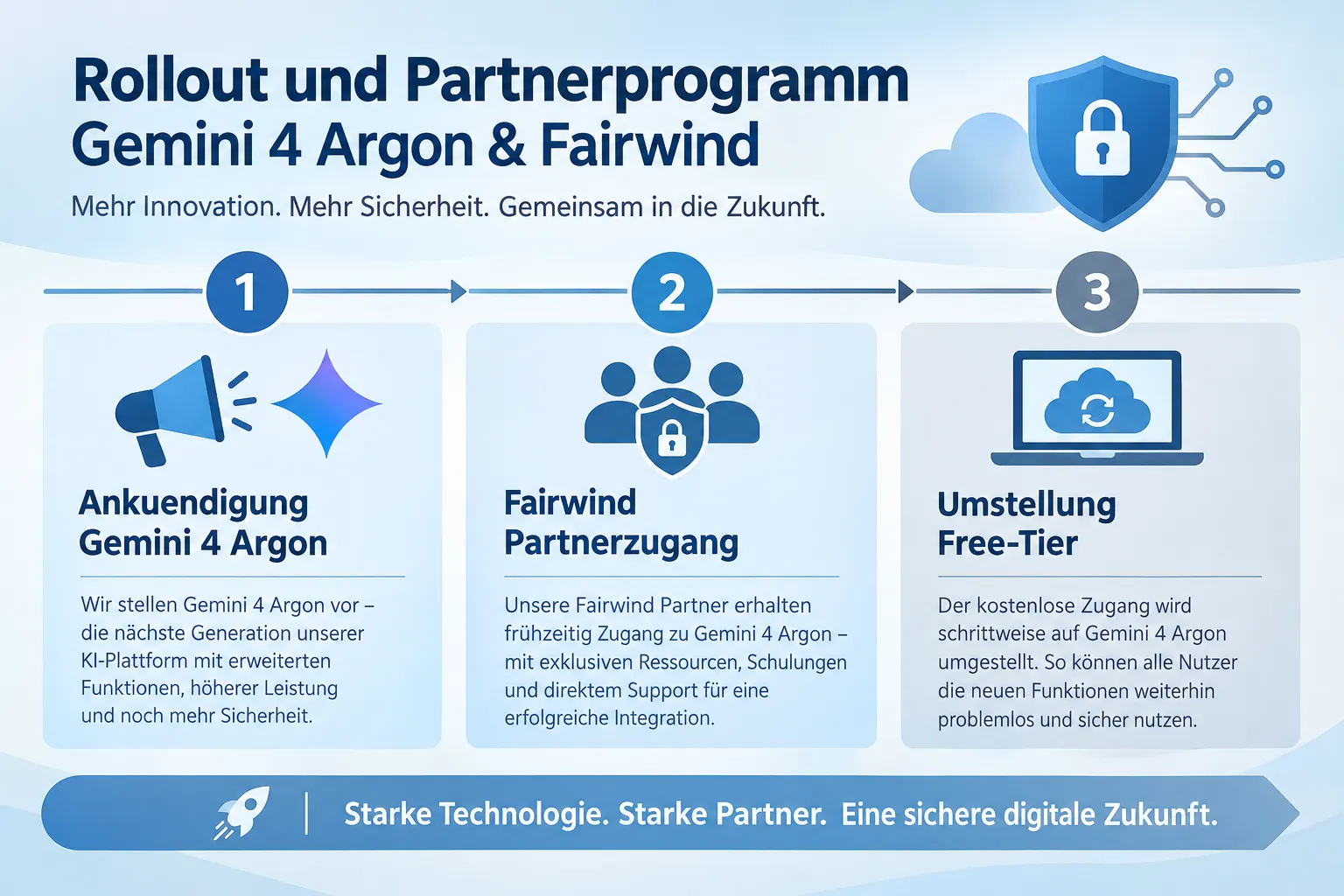
- September 30, 2026: Google announces Gemini 4 Argon, a new flagship model with an output limit of up to 1 million tokens, initially exclusive to partners in the “Fairwind” program.
- October 3, 2026: 9to5Google and ppc.land independently report on the upcoming restriction of free Gemini access to Flash-Lite, based on Google’s support document.
- October 9, 2026: The Flash-Lite-only restriction takes effect for all free users; Plus subscribers follow on a staggered schedule per individual notification.
“The change affects not just usage limits, but full access to two models that were previously available for free,” both reports agree, citing Google’s support document.
Context: Gemini 4 Argon and the Economics Behind the Move
The timing next to the Gemini 4 Argon announcement is hardly a coincidence. The new flagship model offers an output limit of up to 1 million tokens and is currently aimed exclusively at select cybersecurity partners in the so-called “Fairwind” program. A model of that size needs considerably more compute capacity than Google’s previous flagships, and that capacity has to come from somewhere.
This is exactly where many industry analysts’ interpretation comes in: the restriction of free access to Flash-Lite is read as a deliberate move to free up expensive compute capacity for Pro and Deep Think requests. Flash-Lite is the most resource-efficient model in Google’s current lineup, well suited to quick, simple requests, while Pro and Deep Think models need significantly more compute per request.
That interpretation lines up with the shift Google already made in May 2026, moving from simple prompt counts to a compute-based usage model. Since then, Google measures not just how often a user makes a request, but how much actual compute that request consumes. Under this billing model, a free Pro model would be considerably more expensive for Google to offer than a free Flash-Lite model, a plausible economic rationale for the realignment.
It’s worth separating confirmed facts from interpretation here: the idea that Google wants to free up compute capacity for pricier models is a reasonable reading of the reporting, but it is not an officially stated reason from Google itself. The actual facts, which model is available at which subscription tier and when, come directly from Google’s support document and are confirmed by two independent sources.
What This Means for Affected Users
For users who rely on Gemini regularly, a practical question now arises: is free Gemini access via Flash-Lite enough for your use case, or is a paid upgrade worth it?
For simple tasks like short drafts, basic research questions, or everyday chat interactions, Flash-Lite should remain more than adequate. The model is specifically built for fast, resource-light responses.
For more demanding work, such as complex analysis, longer document processing, or multi-step reasoning, losing Gemini 3.6 Flash and Gemini 3.1 Pro in the free tier will be noticeable. The only way to keep the same model quality is to move to a paid plan.
Affected Google AI Plus customers should keep an eye on their inbox over the coming weeks, since Google will notify them of their individual transition date by email. Anyone considering an upgrade to Google AI Pro also benefits from the new Deep Think access, a feature previously reserved for the priciest Ultra tiers, which makes the Pro plan notably more attractive than before.
The same pattern shows up in Google’s universal AI agent for enterprises: Google is increasingly bundling its AI resources by target audience and price tier.
Users who rely heavily on free AI tools may also want to look at alternative providers. Services like Anthropic’s Claude, OpenAI’s GPT, or xAI’s Grok each follow their own pricing and access models that evolve independently of Google’s current changes. A direct comparison is especially worthwhile for users whose existing workflow leaned heavily on free-tier Gemini 3.1 Pro.
Bottom Line and Next Steps
The shift to a single free Gemini model marks a clear narrowing of free access to Google’s AI models. Starting October 9, 2026, free users are left with just one resource-efficient model, while Pro and Flash access disappear entirely. Paying users are affected to varying degrees: Google AI Plus loses Pro access, while Google AI Pro gains the previously exclusive Deep Think feature in return.
Anyone trying to make sense of the new situation should consider three concrete steps: first, realistically assess your own usage needs, is Flash-Lite enough for what you actually do. Second, Plus subscribers should watch closely for Google’s individual email notification so they don’t miss their personal transition date. Third, heavy Pro users should weigh early on whether upgrading to Google AI Pro, with its new Deep Think access, makes more economic sense. The developments around Gemini 4 Argon also show that Google is increasingly allocating its compute resources by user group, a trend that makes further adjustments to the free tier likely in the future.
Sources
- 9to5Google, October 3, 2026: Reporting on the restriction of free Gemini access to Flash-Lite, based on Google’s support document “Changes to Gemini model access and limits.”
- ppc.land, October 3, 2026: Independent confirmation of the model changes and the new access rules for Google AI Plus, Pro, and Ultra.