
Google made Gemini Robotics ER 2 available in public preview on Google Cloud on October 27, 2026. The Google DeepMind model is meant to act as a robot’s “high-level brain”: it analyzes camera images and video, plans multi-step tasks and calls other models or robot interfaces to carry them out. What is new is not the model itself but the access: companies can now use it through the Gemini Enterprise Agent Platform with Google Cloud’s security and billing tools.
Here is what the model can do, which numbers Google gives, what it costs and where the limits are.
Key Takeaways
- Gemini Robotics ER 2 (
gemini-robotics-er-2-preview) has been in public preview on Google Cloud since October 27, 2026. Until then it was only in private preview there. - The model is based on Gemini 3.5 Flash, accepts text, image, video and audio, and responds in text.
- Google cites 91.3 percent accuracy in finding the right moment in a video. These are vendor figures.
- Pricing per Google’s pricing page: $1 per million input tokens and $5 per million output tokens through December 31, 2026, double that from January 1, 2027.
What is Gemini Robotics ER 2?
“ER” stands for embodied reasoning, meaning reasoning about the physical world. Google DeepMind introduced the Gemini Robotics 2 family on July 30, 2026. It consists of three models: Gemini Robotics 2, a vision-language-action (VLA) model that turns images and language directly into motor commands; Gemini Robotics On-Device 2, which runs on the robot itself; and Gemini Robotics ER 2 as the planning layer on top.
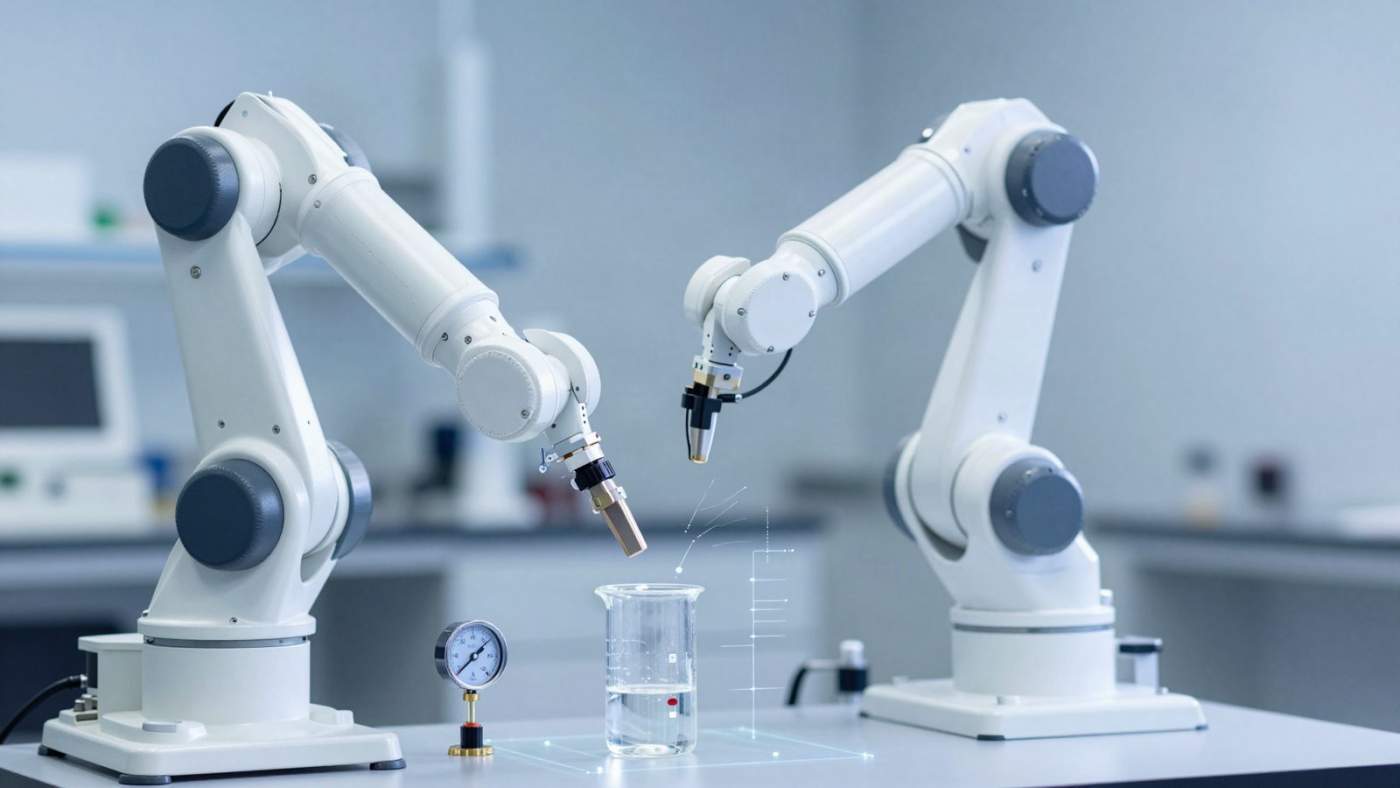
ER 2 does not move any motors itself. It understands the environment, breaks a task into steps and calls a tool for each step, such as a VLA model, a navigation API or a custom function. “Put the apple in the bowl” becomes a sequence of locate, grasp and place, as Google’s developer documentation explains.
Since July, ER 2 has been publicly available through the Gemini API and Google AI Studio, but only in private preview on Google Cloud’s enterprise platform. Google is now closing that gap.
Gemini Robotics ER 2 capabilities at a glance
In the Google Cloud blog post, Carolina Parada, head of DeepMind Robotics, and Adrian Jones of Google Cloud describe four focus areas:
- Task verification and self-correction: the model classifies task progress as a binary status, discrete categories or a continuous score. A robot can then retry a failed step without restarting the whole workflow.
- Moment finding in video: for example, the exact point at which to stop pouring a liquid. Google reports 91.3 percent accuracy and a mean absolute frame distance of 0.96 seconds.
- Instrument reading: according to Google, more than ten categories, including circular dials, sight glasses, digital displays, rulers and liquid thermometers.
- Multi-robot coordination: different robot types, from stationary arms to quadrupeds and humanoids, are meant to share an understanding of the workspace and hand off tasks to one another.
On top of that comes natural language control. Operators should be able to redirect a robot without technical commands, and the robot should be able to explain what it is doing.
Technical specs
According to the Google Cloud documentation, the model handles up to 131,072 input tokens and 65,536 output tokens. It supports function calling, code execution, structured output and grounding with Google Search and Google Maps. On Google Cloud it is available only through the GenerateContent API and only in the “global” region, with a default quota of 250 requests per minute per project. The Live API and the Chat Completions API are not supported there.
What Gemini Robotics ER 2 costs
Google Cloud’s pricing page lists the model as “Gemini ER 2.0” with two price levels per million tokens:
- Through December 31, 2026: $1.00 for input (text, image, video, audio), $0.10 for cached input, $5.00 for text output.
- Starting January 1, 2027: $2.00 for input, $0.20 for cached input, $10.00 for text output.
Google says the lower price is promotional, provided through 50 percent credits back on net spend on select models. One detail matters for budgeting: output covers both the response and the reasoning, meaning the model’s internal thinking steps. With video input and a high thinking level, that can add up quickly.
What Google Cloud offers around the model
Google positions ER 2 as one piece of a larger robotics pipeline on its own infrastructure. Developers are meant to test robot behavior first in simulators such as MuJoCo-Warp or NVIDIA Isaac Sim, then use ER 2’s video capabilities to label demonstration videos in Cloud Storage and BigQuery and train their own VLA models on them. In operation, latency-sensitive work such as localization and path planning is supposed to run directly on the factory floor through Google Distributed Cloud.
Google quotes Boston Dynamics (the Spot inspection robot), the startup DeepReach, Arm and the Institute of Materials Research and Engineering at Singapore’s research agency A*STAR as early users. The latter wants lab robots to read the touchscreen of an older microwave reactor that has no API, or to load a centrifuge.
Limits and open questions
All performance figures come from Google’s own evaluations. Independent tests under real conditions in factories or labs are not yet available. The model is also labeled a pre-GA offering: it is provided “as is” and “might have limited support,” although Google says customers may already use it for production.
The documentation itself lists typical weaknesses: complex queries and high thinking levels increase latency, the model can hallucinate, and output quality depends heavily on precise prompts. Google also stresses that the operator is responsible for a safe environment around the robot.
The privacy notice is relevant for European companies. Because the models process video and audio, Google requires that identifiable people near the robot be notified and give consent beforehand, and it recommends techniques such as face blurring. Anyone planning to use ER 2 in facilities with staff will need to clear that with works councils and data protection officers.
Context
Robotics AI is one of the busiest fields this fall. Black Forest Labs released an open robotics model with FLUX 3 Action, and small devices like the Microduck robot show how much is happening even in small robotics hardware. The AI partnership between Nvidia and Germany is also aimed at industry.
Google’s approach differs in that ER 2 is not a complete system but a planning layer billed by the token that can be combined with any robot and control model. That lowers the barrier for companies already working on Google Cloud, but it also ties them more closely to the platform.
Bottom line
The public preview on Google Cloud makes Gemini Robotics ER 2 much easier for companies to use. The capabilities sound practical, especially for inspection, lab automation and quality control. But the promises will only be solid once customers report independently how reliably the model works in real facilities. Until then, ER 2 is an interesting tool for pilot projects, with predictable costs that will, however, double in 2027.